A cluttered entryway can quickly make your home feel disorganized, especially when shoes start piling up near the door. The right storage solution can help keep footwear organized while making your entrance look cleaner and more welcoming. These entryway shoe storage ideas offer practical options for different spaces, from narrow hallways and compact entrances to busy family homes.
1. Hide Shoes Inside a Slim Cabinet
This article contains affiliate links. I may earn a commission at no extra cost to you.

- Entryway Shoe Cabinet: The hidden shoe storage cabinet with 2 flip doors, stylish and simple rustic brown makes it a nea…
- Flip Drawers Shoe Cabinet: The modern freestanding shoe cabinet adopts the design of space-saving flip drawers, which is…
- Large Capacity Shoe Cabinet: The drawer shoe cabinet can store up to 24-32 pairs. There are two upper and lower drawers,…
A narrow shoe cabinet can be a lifesaver in a small entryway.
Because it does not stick far out from the wall, it works well in hallways where a deep piece of furniture would make walking awkward. The flip-down compartments also keep shoes out of sight, which instantly makes the entrance look calmer.
Place a small tray on top for keys, sunglasses, or mail, and suddenly the cabinet becomes useful for more than just shoes.
2. Use a Bench That Does Double Duty
An entryway bench with shoe storage underneath is one of those pieces that just makes everyday life easier.
You get somewhere to sit while tying your shoes, and the space below can hold the pairs you wear most often. Open shelves are convenient if you are always rushing out the door, while baskets can hide the less attractive stuff.
A soft cushion can make the whole area feel warmer and more welcoming too.

- 【COMPARTMENT DESIGN MEETS OPEN STORAGE】This shoe bench comes from VASAGLE CUSTOS Collection, characterized by the open c…
- 【LARGE CAPACITY】This shoe bench, measuring 11.8″D x 31.5″W x 17.3″H, features a 2.8″ deep storage compartment under the …
- 【ROBUST & LONG-LASTING QUALITY】Crafted from 0.5″ thick quality particleboard panels, this entryway bench boasts a weight…
3. Create a One-Stop Hall Tree
If coats, backpacks, shoes, and umbrellas all end up in the same corner, a hall tree can help bring some order to the chaos.
Hooks keep jackets off chairs. A bench gives you a place to sit. Shoe cubbies underneath stop everything from spreading across the floor.
It is especially handy for families because everyone has a place to drop their everyday things when they come home.

- Particleboard, Steel
- [3-in-1 Coat Rack] Hooks for your coats and bags, a shoe bench for you to change shoes, and a shoe rack to keep your sho…
- [9 Durable Coat Hooks] This hall tree comes with 9 sturdy metal hooks in 2 rows (each holds up to 6.6 lb) for your coats…
4. Give Everyone Their Own Shoe Cubby
This idea is simple, but it can make a big difference in a busy home.
Instead of one large pile of shoes, give each person their own cubby or section. It makes it easier to find a pair in the morning and gives everyone a clear place to put shoes back.
You can use cube organizers, built-in storage, or a simple shelving unit depending on the space you have.
Small baskets inside the cubbies can also hold socks, shoe care supplies, or other little things that tend to disappear.

- 【Perfect Entryway Idea】Say goodbye to your chaotic hallway. 16 cubbies easily accommodate 10-16 pairs of shoes. Hold men…
- 【Flexible for Multiple Needs】8 middle compartments are fixed for sneakers, high heels and sandals. The side compartments…
- 【Comfy & Removable Cushion】The sponge cushion is high resilient, soft, breathable without deformation. Zippered cotton a…
5. Try a Wall-Mounted Shoe Cabinet
A floating shoe cabinet is a good option when you want the entryway to feel as open as possible.
Since the cabinet is raised off the floor, you can still see the flooring underneath, which can make a tight space feel less crowded. It also makes sweeping underneath much easier.
Choose a simple design that blends with your wall color if you want the storage to visually disappear into the room.

- 【Crisp and Clean Appearance】Featuring an eye-catching farmhouse inspired design, the shoe cabinet is a stylish solution …
- 【Farewell to Shoe Piles】Keeps shoes handy but out of sight. Your guests will never guess that you have 16 pairs of shoes…
- 【Multi-Layer Storage Space】Tired of wasting time searching for your keys? You can put them on the top of the cabinet for…
6. Start With a Stackable Shoe Rack
Sometimes you do not need a large piece of furniture.
A stackable shoe rack gives you flexibility because you can start small and add more storage later. This is useful if you are renting, living in a small apartment, or simply do not want to fill your entryway with bulky furniture.
You can also adjust the arrangement depending on the seasons. Keep sandals and everyday sneakers near the bottom, then make extra room for boots when the weather changes.

- [Customizable As You Need] You can choose to assemble the shelves flat or at an angle for easier access to shoes. Also, …
- [Taller Shoes Can Fit In, Too] With 8.1″ between shelves, high heels and high-top sneakers can find a perfect perch here…
- [Large Capacity] Sized at 12.1″ x 36.4″ x 64.4″, this large 8-tier shoe organizer can hold 40 pairs of women’s shoes or …
7. Make Use of the Back of a Door
The back of a closet or entryway door is often completely wasted space.
An over-the-door organizer can hold lightweight shoes without taking up any floor room at all. Clear pockets make it easy to see what is inside, while fabric versions can give the space a cleaner appearance.
It is a particularly useful trick for tiny entryways where every inch counts.
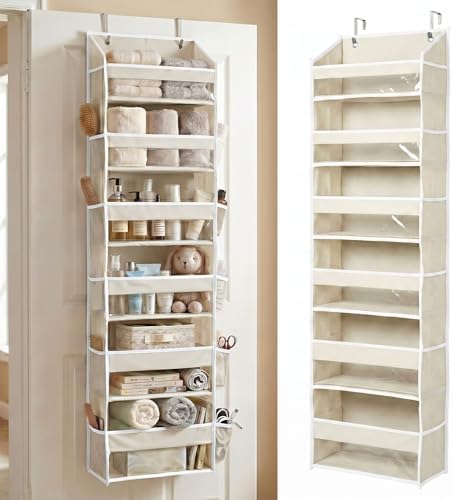
- 🏡Premium Over The Door Shoe Organizer: Crafted from the highest quality non-woven fabric, Homelux Theory’s Over Door Org…
- 🏡 6 Multisized Front Pockets Back Of Door Organizer: Unlike other over the door organizer that only comes with 4-5 pocke…
- 🏡12 Extra Mesh Side Storage: With our over door clothes organizer & over the door shoe organizer, you’ll have more stora…
8. Choose a Shoe Bench With Hidden Drawers
Open shoe storage is convenient, but sometimes you just want to close a drawer and forget about the mess.
A bench with built-in drawers gives you that option.
Shoes stay hidden, while the top becomes a comfortable spot to sit. Add a cushion and the furniture starts to feel like part of the decor rather than purely practical storage.
This can work beautifully in an entryway that opens directly into the living room, where visible shoe clutter can be more noticeable.

- Product Size: 31.5″W x 11.8″D x 16.5″H; Load Capacity: 550 lbs
- Made of 100% rubber wood, this bench rack is stable, sturdy, look good and eco-friendly
- With detachable embedded nut design, easy to install, it is more stable than self tapping screw
9. Use Large Woven Baskets for Everyday Pairs
Not every shoe storage solution needs to look overly organized.
A couple of large woven baskets can create a relaxed drop zone near the door. They are perfect for the shoes you wear regularly and do not want to put away in a cabinet every single time.
This approach works best when you keep the number of shoes under control. One overflowing basket can quickly turn back into the problem you were trying to solve.
Choose baskets that fit comfortably under a bench or console table for an even neater look.

- 100%Cotton
- 【NATURAL COTTON ROPE DESIGN | SOFT & DURABLE】 Made with natural cotton rope, this woven storage basket features a soft t…
- 【EXTRA LARGE BLANKET BASKET | 20″ x 20″ x 13″ LARGE CAPACITY】 Designed as a large blanket basket for living rooms, this …
10. Go Up With a Tall Shoe Cabinet
When your entryway is narrow, width is not always your friend.
A tall shoe cabinet takes advantage of vertical space instead. It can hold a surprising number of pairs while using a relatively small footprint.
This is a smart choice for apartments, condos, and narrow foyers where every bit of floor space matters.
If possible, choose adjustable shelves so you can make room for taller shoes and boots.

- SOLID CONSTRUCTION: Say goodbye to the flimsy and cheap shoe stand closet shoe rack. Made of premium E0 particle board, …
- FLEXIBLE AND LARGE CAPACITY: The top shelf of this shoe storage can be used to place your bags, potted plants and decora…
- ELEGANT HOME DECOR: Crafted with wooden board and finely polished with water-proof and wear-resistant grey paint, this e…
11. Turn the Space Under a Console Table Into Shoe Storage
Take a look underneath your entryway console table.
That empty space can easily become a small shoe storage area.
A low rack can keep shoes lined up neatly, while baskets can hide them completely. The tabletop above still has room for keys, a lamp, or a decorative bowl.
It is a simple way to get more function from furniture you may already own.

- Large Capacity: This shoe rack offers a spacious solution to help you optimize space usage. With dimensions of 39.7 inch…
- Versatile Storage Box: The top drawer is ideal for small items like keys, wallets, shoe accessories, or shopping bags. A…
- Strong Load-Bearing Capacity: Crafted from solid bamboo, this shoe rack offers greater durability and load-bearing stren…
12. Keep Shoes and Umbrellas Together
Rainy days have a way of making entryways messy.
Wet umbrellas get leaned against the wall, damp shoes sit near the door, and suddenly there is water everywhere. A compact organizer that includes room for both shoes and umbrellas can help keep everything contained.
A waterproof tray underneath is also worth considering, especially for boots or wet footwear.
It is one of those small additions that can make the whole entryway easier to maintain.

- Large 9-tier Shoe Rack: This large 9-tier shoe rack measures 33.1″W × 11.8″D × 62.6″H, capable of easily holding 25-35 p…
- High Stability & Durability: Crafted from durable waterproof non-woven fabric layers, reinforced plastic connectors, and…
- Versatile Usage Scenarios: More than just a shoe rack, this organizer is also ideal for storing bags, toys, towels, sund…
A Tidy Entryway Starts With a Simple System
The best entryway shoe storage does not have to be complicated.
For some homes, a slim cabinet is the answer. Others may need a bench, baskets, cubbies, or a tall vertical organizer. The important thing is creating a spot where shoes can actually go when people walk through the door.
Start by thinking about the pairs that are used every day. Those should be the easiest to reach.
Once they have a proper home, you may be surprised by how much calmer your entryway feels.
A clear floor, a place to sit, and a simple system for keeping shoes together can make even the smallest entrance feel more organized and welcoming.