If you love cozy, oven-baked dinners that feel special but still homemade, Lasagna Bolognese is the dish that never disappoints. This is the traditional Italian version made with slow-simmered meat ragu, silky béchamel, and delicate layers of pasta baked until perfectly golden. Unlike cheese-heavy American lasagna, Lasagne al Forno is lighter, smoother, and beautifully balanced — a true taste of Bologna’s rustic kitchens
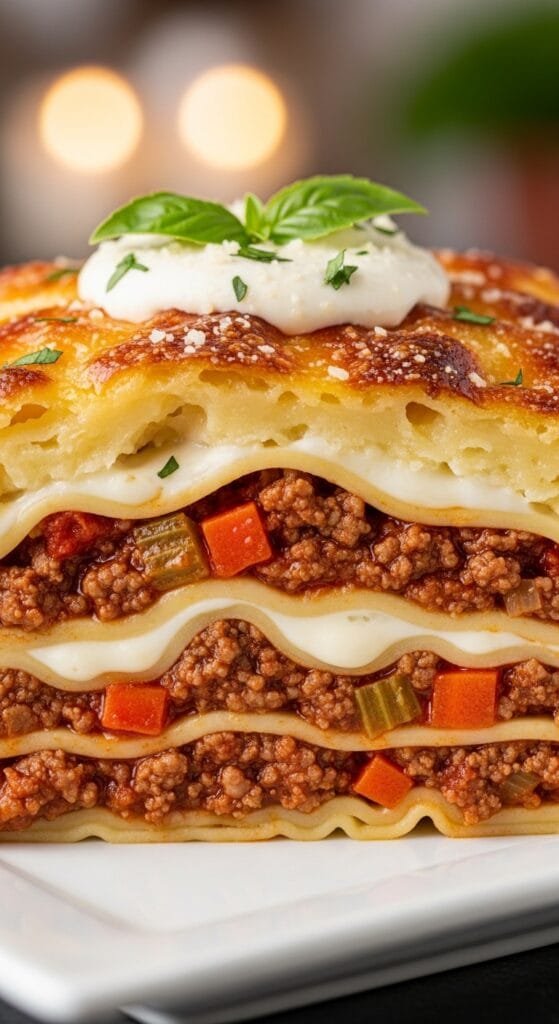
Tip: Make the ragu a day ahead for deeper flavor and less prep Whether you’re cooking for a family dinner, a Sunday meal, or guests you want to impress, this lasagna delivers comforting flavor in every bite. Once you try this authentic version, you’ll understand why it’s a timeless Italian classic.
Why You’ll Love This Lasagna
- Rich slow-cooked Bolognese ragu
- Creamy béchamel that adds silkiness
- Tender pasta layers that hold their shape
- Perfect for leftovers and meal prep
- Save this recipe now so you can easily find it again!
Ingredients You’ll Need
For the Pasta Layers
- 1 lb dried lasagna noodles (or fresh sheets)
For the Bolognese Ragu
- 3 cups classic Bolognese (beef + pork recommended)
- 1 cup reserved pasta water (optional but helpful for moisture)
For the Béchamel Sauce
- 2¼ cups whole milk
- 4 tbsp butter
- 4 tbsp all-purpose flour
- ¼ cup grated Parmesan
- ⅛ tsp nutmeg
- Salt & pepper to taste
For Assembly
- ½ cup grated Parmesan for topping
- Butter for greasing the dish
Detailed Step-by-Step Instructions
Before You Begin
Preheat and prepare your cookware as needed. Cooking times and results may vary depending on your equipment and ingredients.
- Prepare the Béchamel Sauce
Warm the milk in a saucepan until steaming (do not boil).
In another pan, melt butter over medium heat, whisk in flour, and cook for 2–3 minutes until smooth.
Slowly pour warm milk into the roux while whisking to prevent lumps.
Cook for 3–5 minutes, or until the sauce thickens enough to coat the back of a spoon.
Season with nutmeg, salt, pepper, and Parmesan.
Cover with plastic wrap touching the surface to prevent a skin. - Par-Boil the Pasta
Bring salted water to a boil.
Cook noodles for half the package time until flexible but still firm.
Drain and lay flat on towels to prevent sticking. - Warm the Bolognese Ragu
Heat the ragu in a saucepan over medium heat until steaming hot.
Add pasta water as needed to loosen the sauce and maintain moisture. - Assemble the Lasagna
Preheat oven to 400°F (200°C).
Butter a 9×13-inch baking dish.
Spread a thin layer of ragu.
Add pasta sheets → béchamel → ragu.
Repeat layers, finishing with béchamel + Parmesan. - Bake
Bake for 20–25 minutes, or until the top is lightly golden and bubbling around the edges. - Check Internal Temperature
Insert a thermometer in the center. Ensure it reaches 165°F (74°C) for safe serving. - Rest Before Slicing
Let the lasagna rest for 10–15 minutes so the layers can set and slice cleanly.
Food Safety, Storage, Freezing & Reheating
- Food Safety
- Final internal temperature must reach 165°F (74°C).
- Refrigerate leftovers within 2 hours.
- Reheat until hot throughout.
- Make Ahead
- Assemble up to 24 hours in advance and refrigerate.
- Freeze assembled lasagna up to 3 months.
- Storage
- Refrigerator: up to 3 days.
- Freezer: up to 3 months.
- Reheating
- Oven: 350°F covered until heated through.
- Microwave: heat portions in short intervals.
Common Mistakes to Avoid
Overcooking pasta — it becomes mushy after baking
Forgetting pasta water — ragu will be too dry
Using cold sauces — they won’t spread smoothly
Cutting too soon — layers will collapse
Adding mozzarella — not traditional and becomes heavy
FAQ
1. Can I use fresh lasagna sheets instead of dried?
Yes, fresh pasta works beautifully. It cooks faster and gives a delicate texture. Just reduce boiling time or skip it entirely if the sheets are very thin.
2. How is Lasagna Bolognese different from regular lasagna?
Traditional Bolognese uses ragu + béchamel instead of ricotta and mozzarella. It’s lighter, creamier, and focuses on slow-cooked flavor rather than heavy cheese layers.
3. Can I assemble this lasagna a day ahead?
Absolutely. Assemble fully, cover tightly, and refrigerate up to 24 hours. Add 5 extra minutes to the bake time if very cold.
4. Can I freeze unbaked lasagna?
Yes. Freezing before baking helps keep the structure firm. Wrap tightly in plastic + foil.
5. Why does my béchamel turn lumpy?
Lumps form when milk is added too fast or the roux wasn’t whisked enough. Adding warm milk slowly while whisking prevents this.
6. Can I use gluten-free noodles?
Yes, but boil them carefully. Gluten-free noodles can break more easily, so undercook slightly.
7. Should I cover lasagna while it bakes?
Traditional Lasagne al Forno is not covered because it doesn’t contain mozzarella that burns easily. However, you can tent foil loosely if the top browns too fast.
8. My lasagna is too dry — what happened?
Use enough béchamel and ragu on each layer. Adding pasta water to the ragu helps the noodles finish cooking in the oven.
9. Can I add vegetables?
Yes! Mushrooms, spinach, zucchini, or roasted eggplant work well. Keep layers thin so the lasagna stays structured.
10. Why does lasagna need to rest before slicing?
During resting, the béchamel and ragu firm up slightly, allowing clean slices instead of a runny mess.
Conclusion
Authentic Lasagna Bolognese is one of those dishes that brings comfort, warmth, and tradition to the table. The combination of slow-simmered ragu, creamy béchamel, and perfectly baked pasta layers creates a flavorful, beautifully balanced meal that feels both rustic and elegant. This lasagna is not complicated — it simply relies on patient cooking and classic Italian techniques that stand the test of time. Whether you’re making it for a holiday dinner, a cozy weekend meal, or a special family gathering, this recipe is sure to impress. Serve it once, and it will quickly become one of your favorite go-to lasagna variations.
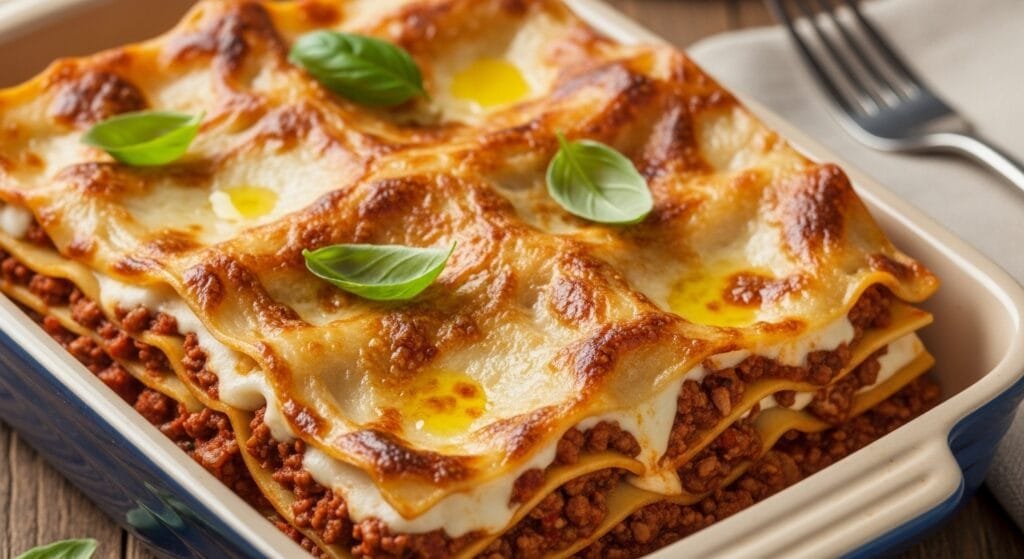

Authentic Lasagna Bolognese (Lasagne al Forno)
Ingredients
Method
- Before You Begin
- Preheat and prepare your cookware as needed. Cooking times and results may vary depending on your equipment and ingredients.
- Warm the milk in a saucepan over medium heat until steaming but not boiling. Heating time may vary depending on stovetop heat.
- Melt butter in a saucepan, whisk in flour, and cook 2–3 minutes.
- Slowly whisk in warm milk and cook 3–5 minutes until thickened. Season and set aside.
- Boil noodles until flexible but still firm. Drain and lay flat. Do not leave cooked pasta at room temperature longer than 2 hours.
- Warm ragu over medium heat until steaming. Add pasta water if needed.
- Preheat oven to 400°F (200°C). Butter a 9×13-inch baking dish.
- Layer ragu → pasta → béchamel. Repeat layers and finish with béchamel + Parmesan.
- Bake for about 20–25 minutes, or until the top appears lightly golden and the sauce is bubbling around the edges. Cooking time may vary depending on oven performance and pan depth.
- Check center reaches 165°F (74°C).
- Rest 10–15 minutes before slicing and serve warm.
Notes
- Follow ingredient measurements for balanced flavor and structure.
- Cooking time may vary depending on oven performance and pan depth.
- Allow the lasagna to rest briefly before slicing so the layers set properly.
- Refrigerate leftovers within 2 hours and store in an airtight container for up to 3 days.
- Reheat gently in the oven or microwave until heated through before serving.
About the Author
Isaac shares easy, family-friendly recipes made with simple ingredients, focusing on clear instructions and reliable results for everyday home cooking.