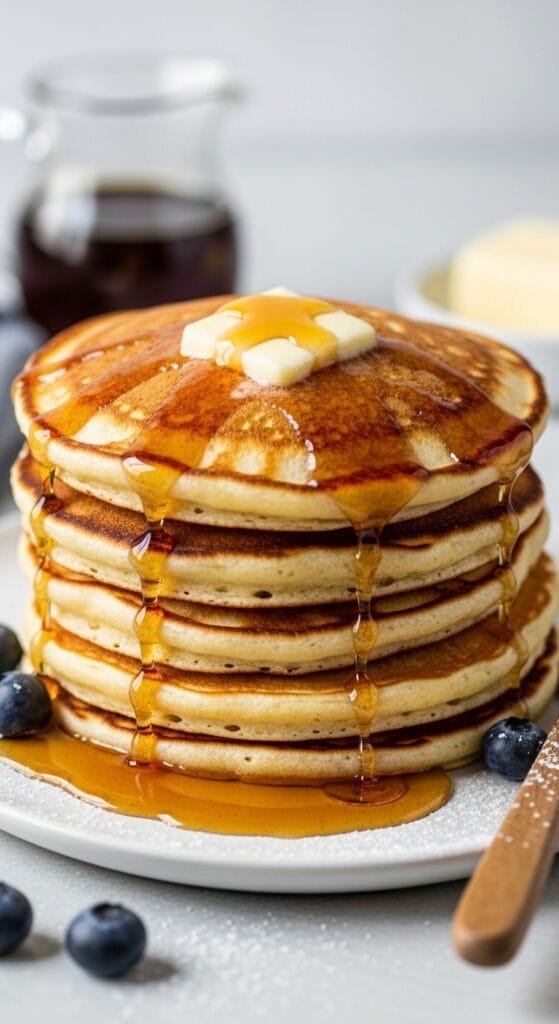
There’s something comforting about a plate of warm pancakes. They’re simple, familiar, and always hit the table with a sense of ease. These Homemade Pancakes deliver everything you want—fluffy centers, lightly crisp edges, and that buttery aroma you can smell from the next room. With pantry staples and a few minutes of mixing, this recipe turns an ordinary morning—or a busy weeknight—into a cozy, satisfying meal.
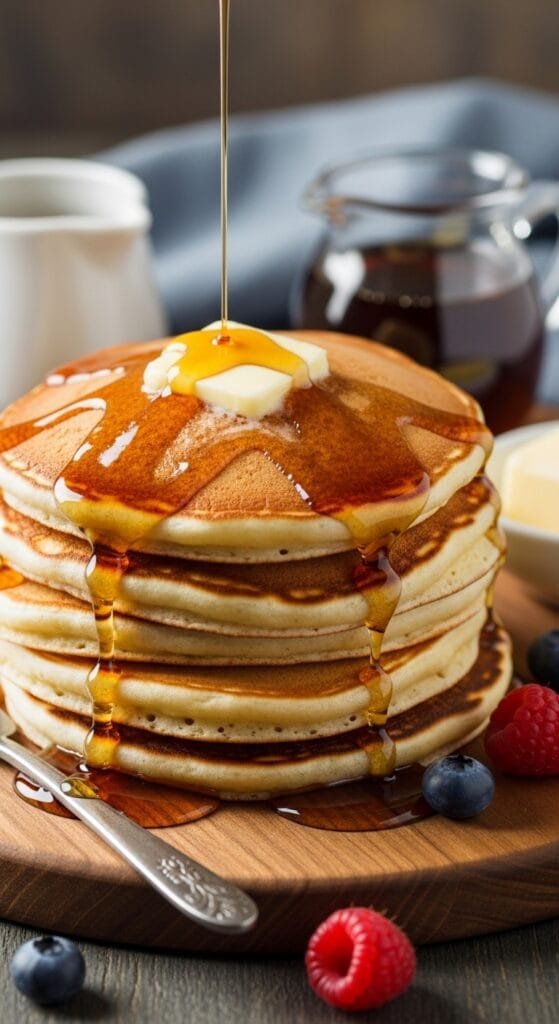
Whether you love pancakes for breakfast, brunch, or “breakfast for dinner,” this recipe gives consistent results every time. It’s kid-friendly, beginner-friendly, and freezes beautifully for quick meals later in the week.
Why This Pancake Recipe Always Turns Out Fluffy
This recipe works because every step supports texture and flavor:
- Correct rise: Baking powder creates lift without giving a bitter taste.
- Moist crumb: The wet-to-dry ratio keeps pancakes soft instead of dry or dense.
- No overmixing: A few lumps protect fluffiness.
- Controlled heat: Medium heat gives the pancakes time to rise before browning.
- Simple ingredients: Nothing unusual—just pantry basics used correctly.
It’s a recipe you can rely on again and again.
Ingredients You’ll Need
Dry Ingredients
- 1 ½ cups all-purpose flour
- 3 ½ tsp baking powder
- 1 tbsp granulated sugar
- ¼ tsp salt
Wet Ingredients
- 1 ¼ cups milk (whole or buttermilk)
- 1 large egg
- 3 tbsp melted butter or vegetable oil
How to Make Homemade Pancakes (Easy Steps)
Before You Begin
Preheat and prepare your cookware as needed. Cooking times and results may vary depending on your equipment and ingredients.
Step 1 — Mix the Dry Ingredients
In a medium bowl, whisk together the flour, baking powder, sugar, and salt until evenly blended.
This helps distribute the leavening so the pancakes rise properly.
Step 2 — Mix the Wet Ingredients
In a separate bowl, whisk the milk, egg, and melted butter (or oil) until smooth.
Make sure the butter is melted but not hot so it doesn’t cook the egg.
Step 3 — Combine the Mixtures
Pour the wet mixture into the dry mixture.
Gently stir until just combined.
A few small lumps are normal—overmixing can make the pancakes dense or tough.
Step 4 — Heat the Pan Safely
Place a nonstick skillet or griddle over medium heat.
Let it warm gradually and lightly grease the surface.
Avoid very high heat, which can cause uneven browning or burning.
Step 5 — Cook the Pancakes
Scoop about ¼ cup of batter onto the preheated pan for each pancake.
Cook until bubbles form on the surface and the edges look lightly set—the top should appear slightly dry, not glossy.
Gently flip and cook the other side until lightly golden.
Adjust heat as needed, as stovetops vary.
Step 6 — Serve Warm
Serve pancakes immediately for best texture.
You may top with syrup, butter, fruit, or other preferred toppings.
If making a large batch, keep them warm on a baking sheet in a low oven so they don’t dry out.
Step 7 — Storage and Reheating
Cool completely before storing.
Refrigerate for 3–4 days in an airtight container.
Reheat in a toaster, oven, or short microwave intervals until warmed through.
For longer storage, freeze pancakes in a single layer, then transfer to a bag.
Safety Notes
- Always cook until the centers are fully set—raw batter should not remain inside.
- Heat varies widely by stove, so adjust as necessary to avoid burning.
- Ingredients with added moisture (fruit, chocolate) may require longer cooking times.
Topping Ideas
Sweet Options
- Berries + maple syrup
- Peanut butter + banana
- Cinnamon sugar
- Nutella drizzle
- Chocolate chips + whipped cream
Savory Options
- Bacon + cheddar
- Fried egg + hot honey
- Spinach + feta
- Sausage gravy
- Ham + Swiss
- Food Safety
- Cook until centers are fully set with no raw batter.
- Refrigerate leftovers within 2 hours.
- Reheat until hot throughout before serving.
- Make Ahead
- Dry ingredients can be mixed and stored up to 1 week in advance.
- Storage
- Refrigerator: 3–4 days.
- Freezer: up to 2 months.
- Reheating
- Toaster for best texture.
- Microwave in short intervals until warm.
- Oven at 300°F for about 5 minutes.
Common Mistakes to Avoid
- Overmixing the batter, which leads to dense or tough pancakes.
- Using expired baking powder, causing flat pancakes with no rise.
- Cooking on heat that’s too high, burning the outside while leaving the inside undercooked.
- Adding mix-ins directly to the bowl, which can make the batter uneven—add them on top of batter in the pan instead.
- Flipping too early, before bubbles appear and edges look set.
- Flipping multiple times, which deflates the pancakes.
- Pressing down with a spatula, squeezing out air and flattening them.
- Not greasing the pan lightly, leading to sticking or uneven browning.
- Letting batter sit too long, which reduces rise and makes pancakes dense.
FAQ
Why are my pancakes turning out tough?
Tough pancakes typically mean the batter was overmixed. When flour is stirred too much, gluten develops and makes the texture chewy. Mix gently and stop as soon as the batter comes together—even if it’s lumpy.
Can I use buttermilk instead of regular milk?
Yes. Buttermilk gives pancakes a richer flavor and extra lift. If the batter becomes very thick, add 1–2 tablespoons of extra milk to adjust the consistency.
Why did my pancakes stay flat?
Flat pancakes usually come from expired baking powder or from cooking on a pan that’s too cool. Test your baking powder by placing a pinch in hot water—if it fizzes, it’s fresh.
Do I have to make the batter right before cooking?
For best results, yes. Pancake batter relies on baking powder activating quickly. However, you can prep the dry mix ahead and store it, then add the wet ingredients when ready.
What’s the best way to keep pancakes warm for a family breakfast?
Place cooked pancakes on a baking sheet in a 200°F oven. They stay warm without drying out.
Why are my pancakes burning?
The pan is too hot. Pancakes cook best on medium heat so they have time to rise before browning.
Can I make gluten-free pancakes?
Yes—use a 1:1 gluten-free baking flour. If the batter feels thick, add a splash of extra milk.
Can I add mix-ins directly to the batter?
You can, but adding them on top of the batter once it’s poured onto the pan prevents them from sinking and keeps the pancakes evenly cooked.
Conclusion
Homemade pancakes are classic comfort food, and this recipe delivers the kind of warm, fluffy stack that feels special any day of the week. With simple steps and everyday ingredients, you get pancakes that rise beautifully, taste buttery, and pair with any toppings you love. Whether you’re hosting brunch, feeding a family, or making breakfast-for-dinner, this recipe is reliable, quick, and easy to customize. Freeze the extras for busy mornings, share them on Pinterest for inspiration, and keep this recipe in your rotation as a go-to favorite that never disappoints.
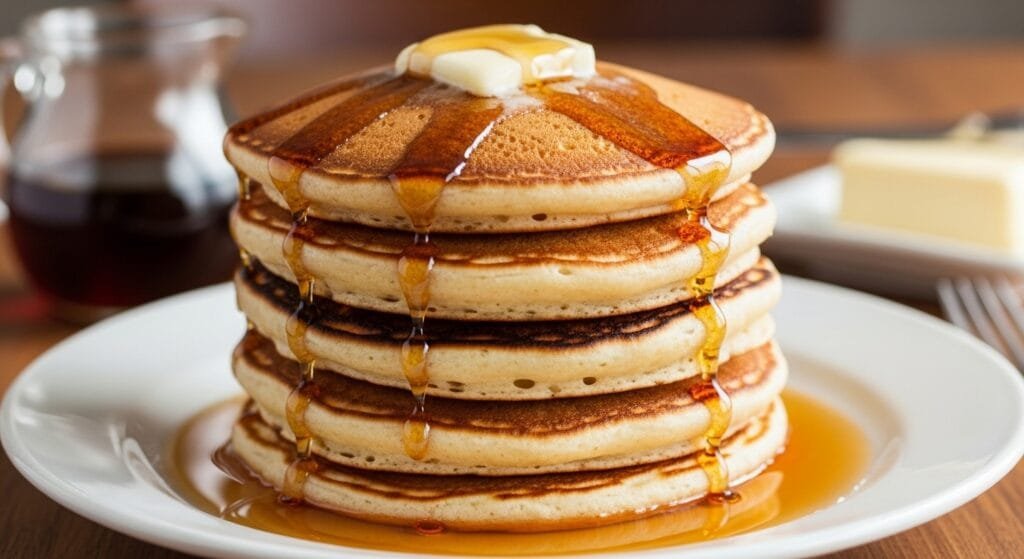

Homemade Pancakes
Ingredients
Method
- Before You Begin
- Preheat and prepare your cookware as needed. Cooking times and results may vary depending on your equipment and ingredients.
- Whisk flour, baking powder, sugar, and salt in a bowl.
- In another bowl whisk milk, egg, and melted butter until smooth.
- Pour wet ingredients into dry ingredients. Stir gently just until combined. Small lumps are normal.
- Heat a lightly greased skillet over medium heat.
- Scoop about ¼ cup batter per pancake.
- Cook until bubbles form and edges look set.
- Flip and cook until lightly golden and centers are fully cooked.
- Serve warm.
Notes
- Measure ingredients accurately for consistent pancake texture.
- Cooking time may vary depending on skillet heat and batter thickness.
- Allow pancakes to rest briefly before serving so structure sets.
- Refrigerate leftovers within 2 hours and store in an airtight container up to 4 days.
- Reheat in a toaster, microwave, or oven until warmed through.
About the Author
Isaac shares easy, family-friendly recipes made with simple ingredients, focusing on clear instructions and reliable results for everyday home cooking.