A beautifully glazed ham has a way of turning an ordinary meal into a warm, festive celebration. When it comes out of the oven—deep golden, caramelized, and shining with a sweet brown-sugar glaze—it fills the kitchen with cozy holiday aromas that feel nostalgic and comforting. Whether you’re making Easter dinner, Christmas lunch, or hosting a special family gathering, this glazed ham delivers impressive flavor with very little effort.
This version focuses on a balanced glaze, gentle heat control, and simple steps that ensure the ham stays juicy, tender, and beautifully caramelized every time.
Why You’ll Love This Glazed Ham
Show-stopping holiday centerpiece
Feeds 10–12 easily and looks gorgeous on any table.
Sweet + Savory balance
Honey, brown sugar, mustard, and warm spices create a glossy, flavorful glaze.
Hands-off cooking
Once it’s in the oven, you only baste occasionally.
Easy to customize
Make it citrusy, smoky, spicy, or maple-sweet.
Leftovers stretch for days
Perfect for breakfast sandwiches, casseroles, omelets, soups, and sliders.
Ingredients
Ham
- 1 bone-in ham (8–10 lbs)
- Whole cloves (optional, for classic scoring pattern)
Classic Honey–Brown Sugar Glaze
- ½ cup honey
- ½ cup brown sugar
- ¼ cup water
- 1 tablespoon Dijon mustard
- 1 teaspoon ground cinnamon
- ½ teaspoon ground cloves
Optional Flavor Boosters
- 1 tablespoon apple cider vinegar
- 1 teaspoon smoked paprika
- ½ teaspoon ground ginger
- Orange zest (for a citrus-forward glaze)
How to Make the Perfect Holiday Glazed Ham
Before You Begin:
Prepare your cookware as needed. Cooking times and results may vary depending on your equipment and ingredients.
1. Prepare the Ham
- Preheat oven to 325°F (165°C).
- Place ham cut-side down in a roasting pan.
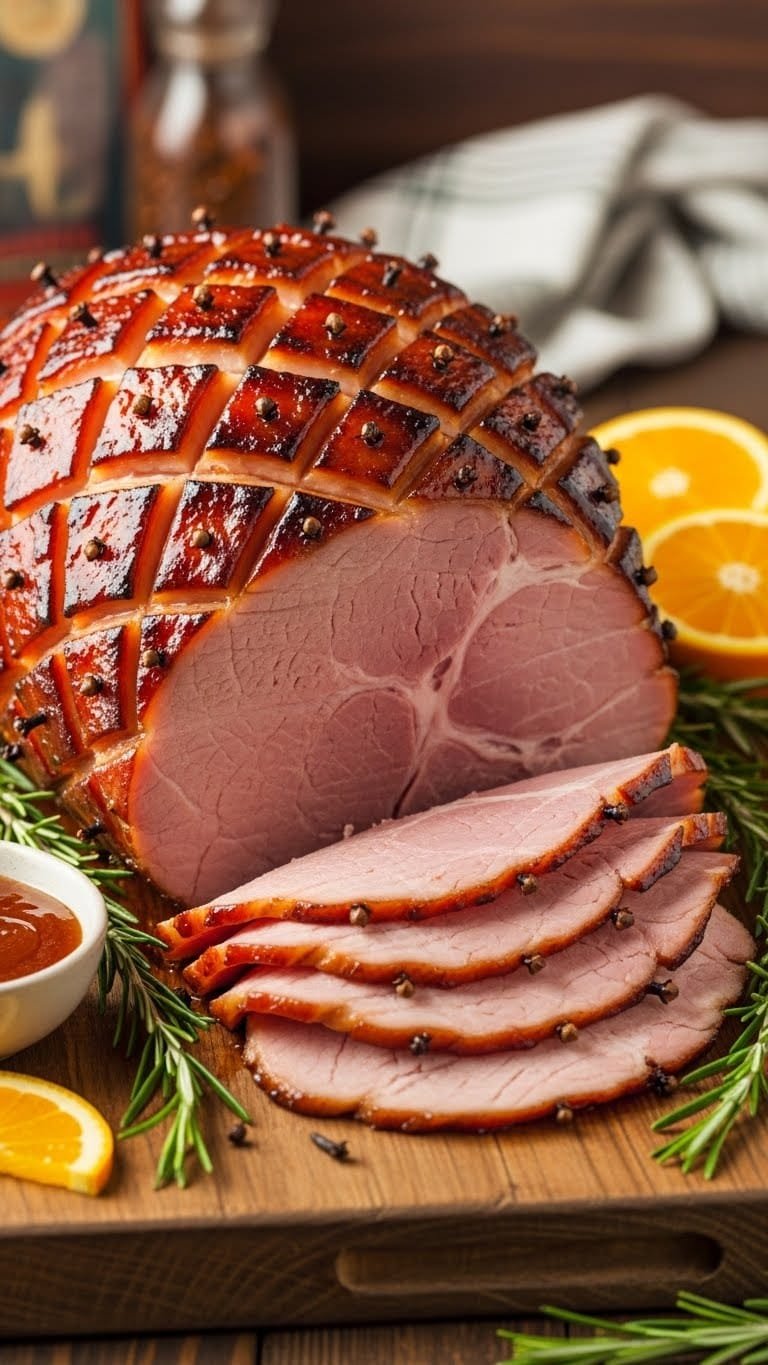
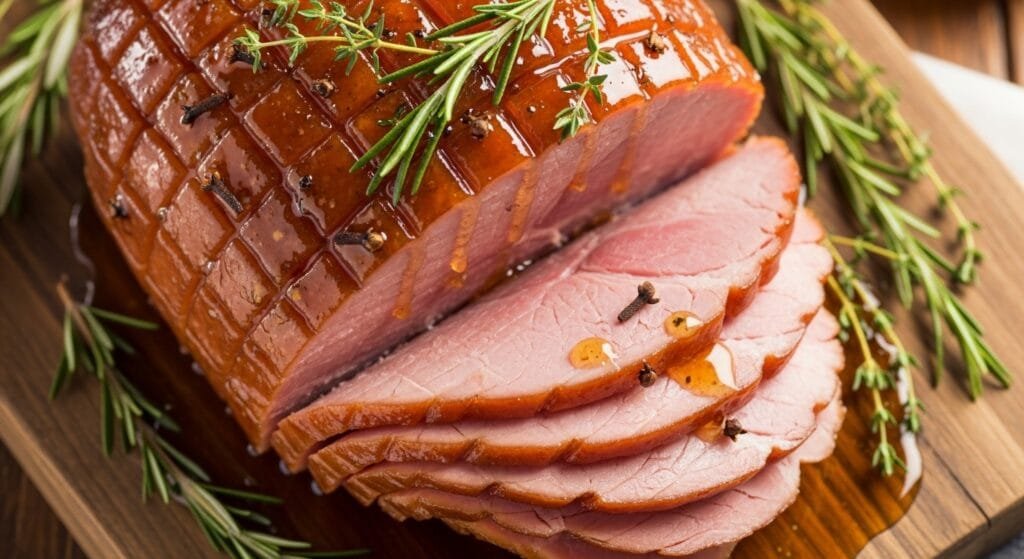
- Score the fat ¼-inch deep to help the glaze adhere.
- Insert cloves if using.
- Cover the ham with foil to prevent drying.
2. Make the Glaze
- Warm honey, brown sugar, and water in a small saucepan until smooth.
- Remove from heat and stir in mustard and spices.
- Keep glaze warm but do not boil once sweeteners are added.
3. Bake the Ham Safely
Bake covered for about 12–15 minutes per pound for fully cooked bone-in ham, or 10–12 minutes per pound for boneless ham. Cooking time may vary depending on ham size and oven performance. Baste every 20–30 minutes with pan juices.
4. Glaze and Finish
- During the final 30 minutes:
- Uncover the ham
- Brush glaze over the surface
- Return to oven to caramelize
- For fully cooked hams: cook to internal temp 140°F (60°C).
- For fresh/uncooked hams: reach 145°F (63°C) then rest 3 minutes.
5. Rest and Serve
- Let ham rest 10–15 minutes before slicing.
- Resting allows juices to redistribute and prevents dryness.
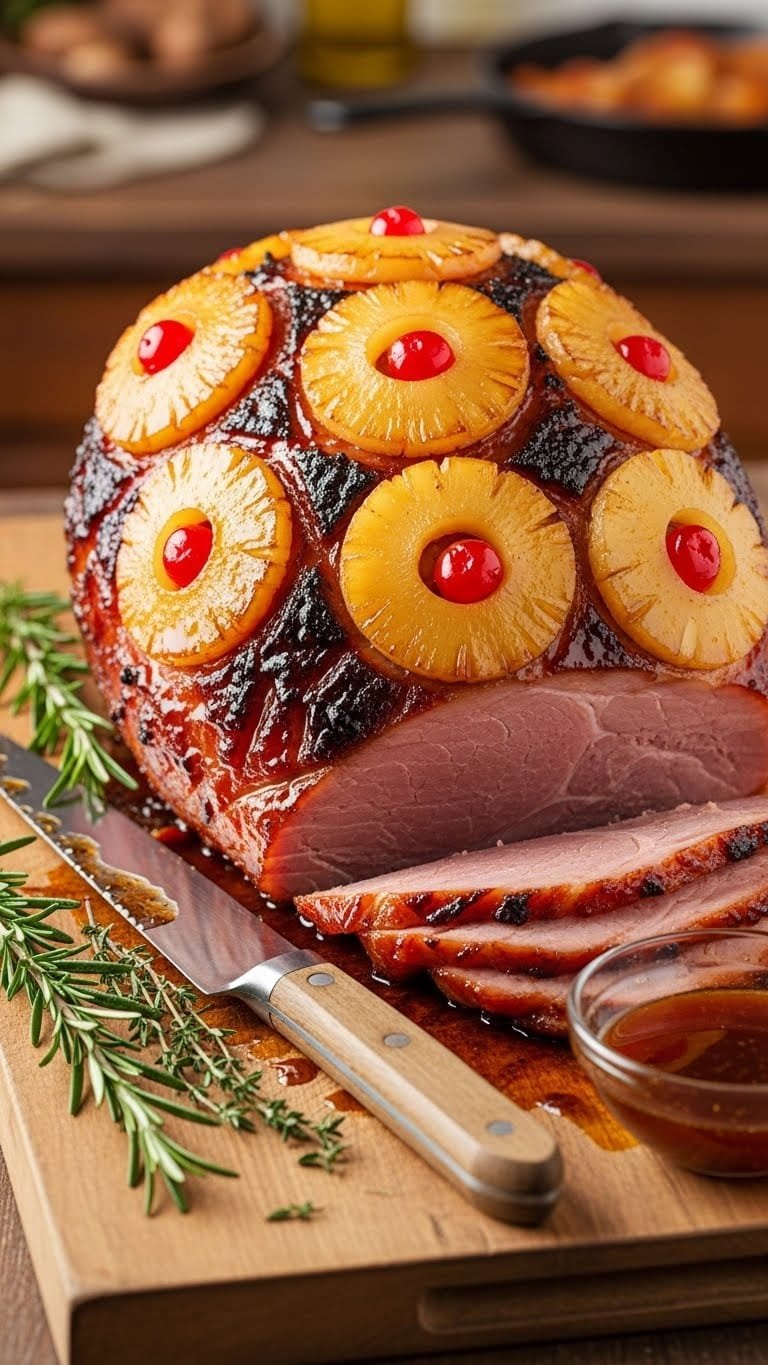
Flavor Variations
Pineapple–Honey Glaze
Maple–Mustard Glaze
Use maple syrup and add an extra teaspoon of Dijon.
Orange–Spice Glaze
Add orange zest and a pinch of nutmeg.
How to Serve Glazed Ham
Best served with:
- Roasted potatoes
- Scalloped potatoes
- Green beans or asparagus
- Honey-glazed carrots
- Buttery rolls
- Cranberry sauce
Perfect for buffet-style holiday meals or carving at the table.
Food Safety
- Cook until internal temperature at the thickest part reaches:
- 140°F (60°C) for fully cooked ham
- 145°F (63°C) plus a 3-minute rest for raw ham
- Refrigerate within 2 hours
- Store at or below 40°F (4°C)
- Reheat leftovers to 165°F (74°C)
- Use clean utensils when handling cooked meat
Make Ahead
- Glaze can be prepared up to 3 days ahead and refrigerated
- Ham may be scored and seasoned up to 24 hours ahead
Storage, Freezing & Reheating
Refrigerate
Store slices in an airtight container for up to 5 days.
Freeze
Wrap tightly and freeze for up to 2 months.
Reheat
Wrap ham in foil with a small splash of broth or water and reheat at 300°F (150°C) for about 15–20 minutes, or until the internal temperature reaches 165°F (74°C).
Common Mistakes to Avoid
- Applying glaze too early – causes the sugars to burn before the ham heats through.
- Skipping the foil during initial baking – leads to dry, tough ham.
- Not checking internal temperature – fully cooked ham should reach 140°F; raw ham needs 145°F + rest.
- Using cold ham straight from the fridge – increases cook time and can dry out the edges.
- Basting too infrequently – prevents the glaze from caramelizing evenly.
- Skipping the resting time – slicing too soon lets juices spill out.
- Using cold stock or water in the pan – can slow cooking and cause uneven heating.
- Not scoring the fat layer – prevents glaze from absorbing properly.
FAQs
1. What makes a glazed ham truly flavorful?
A great glazed ham has contrast—salty, smoky meat paired with a sweet, glossy glaze. The sugar caramelizes in the oven, creating a sticky coating that enhances the ham’s natural flavor without overpowering it. Bone-in hams tend to hold moisture better and often result in richer flavor, which is why many cooks prefer them for holiday gatherings.
2. Should I choose bone-in or boneless ham?
Bone-in ham has deeper flavor and looks more traditional on the table. Boneless ham is easier to carve and works well for smaller gatherings or when you plan to use leftovers for sandwiches. Both work—the choice simply depends on your preference for convenience vs. presentation.
3. Why score the ham before baking?
Scoring helps the glaze seep into the meat and creates beautiful caramelized edges. The diamond pattern also gives the ham a classic holiday look. It’s not required, but it absolutely elevates the final result.
4. When is the best time to apply the glaze?
Glaze should be added during the final 30 minutes of baking. Applying it too early risks burning the sugars before the ham is heated through. Adding it at the end ensures deep caramelization without bitterness.
5. How do I keep the ham from drying out?
Covering the ham at the beginning and basting occasionally helps retain moisture. Baking at a moderate temperature (325°F) also keeps the texture tender. Always rest the ham before slicing so the juices redistribute.
6. Can I prepare glazed ham ahead of time?
Yes. Cook the ham fully, slice it, and store with its juices in the refrigerator. Reheat gently with foil to keep it soft and moist. Some cooks even believe the glaze tastes better the next day as the flavors deepen.
Conclusion
This sweet, sticky glazed ham brings comfort, nostalgia, and celebration to the table. With its caramelized crust and tender slices, it consistently earns compliments and becomes a holiday favorite year after year. Whether you follow the classic glaze or try a citrus, maple, or smoky variation, the method remains simple and rewarding. Serve it as the star of your Christmas, Easter, or family gathering—and enjoy effortless leftovers afterward. With minimal prep and maximum flavor, this glazed ham is the kind of recipe you’ll return to every holiday season.

Glazed Ham
Ingredients
Method
- Before You Begin
- Prepare your cookware as needed. Cooking times and results may vary depending on your equipment and ingredients. Wash hands and surfaces after handling raw meat. Do not leave cooked ham at room temperature longer than 2 hours.
- Prepare the Ham
- Preheat oven to 325°F (165°C). Place ham cut-side down in a roasting pan. Score fat in a shallow diamond pattern and insert cloves if using. Cover loosely with foil.
- Make the Glaze
- Warm honey, brown sugar, and water in a saucepan until smooth. Remove from heat and stir in mustard and spices. Keep warm but do not boil.
- Bake
- Bake covered for about 12–15 minutes per pound for fully cooked bone-in ham, or 10–12 minutes per pound for boneless ham. Cooking time may vary depending on ham size and oven performance.
- Baste every 20–30 minutes with pan juices.
- Glaze
- During the final 30 minutes of baking, uncover the ham and brush generously with glaze. Continue baking until the glaze looks glossy and lightly caramelized. Return to oven uncovered.
- Cook until internal temperature reaches:
- 140°F (60°C) for fully cooked ham
- 145°F (63°C) + 3-minute rest for raw ham
- Rest & Serve
- Rest 10–15 minutes before slicing. Serve warm.
Notes
- Score the ham and apply glaze during the final baking stage to prevent burning.
- Store leftovers in an airtight container in the refrigerator for up to 5 days.
- Freeze tightly wrapped portions for up to 2 months.
- Reheat wrapped in foil at 300°F (150°C) with a splash of liquid until heated through (165°F / 74°C).
About the Author
Isaac shares easy, family-friendly recipes made with simple ingredients, focusing on clear instructions and reliable results for everyday home cooking.