A classic fish fry doesn’t need to be complicated. With the right coating, the proper oil temperature, and a few simple techniques, you can achieve consistently crisp, golden fish at home. This recipe relies on affordable ingredients, steady heat, and a coating that stays crunchy while the fish remains tender and flaky. It’s perfect for family meals, weekend cooking, or anytime you want a reliable, crowd-pleasing dish
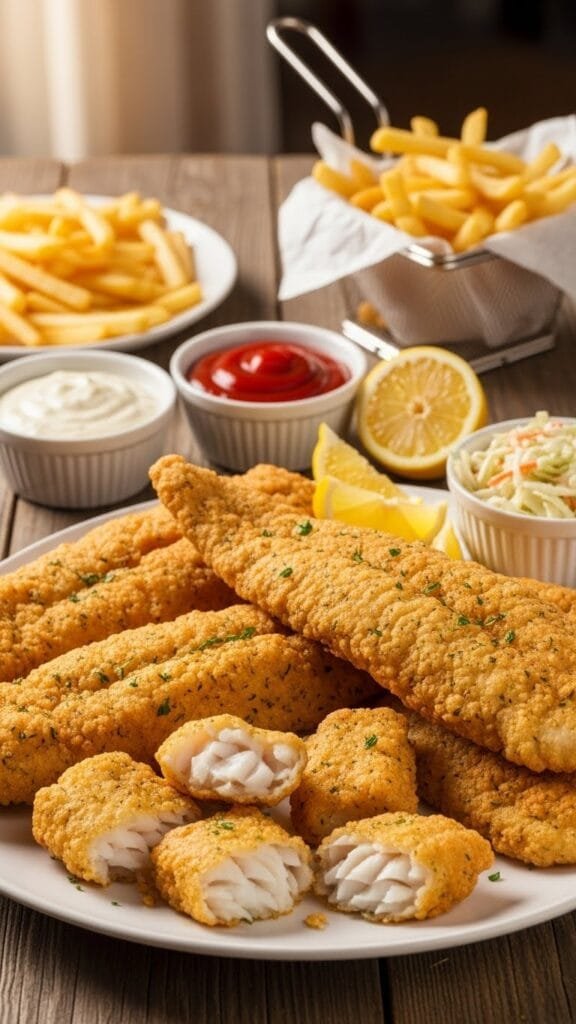
Why You’ll Love This Fish Fry
Crisp texture every time
A blend of flour and cornmeal—or panko for extra crunch—creates a coating that holds up well.
Simple, budget-friendly ingredients
Nothing fancy required; any firm white fish works beautifully.
Customizable seasoning
Adjust heat and spices to match your preference.
Straightforward technique
Clear temperature guidance ensures the fish cooks evenly without becoming greasy.
Ingredients
Fish
- 1.5–2 lbs firm white fish fillets (cod, tilapia, catfish, haddock)
- 1 teaspoon salt
- ½ teaspoon black pepper
- ½ teaspoon garlic powder
- ¼ teaspoon paprika (optional)
Breading / Batter
- 1 cup all-purpose flour
- ½ cup cornmeal or panko
- 1 teaspoon baking powder
- ½ teaspoon salt
- ¼ teaspoon black pepper
- ¼ teaspoon cayenne (optional)
- 2 large eggs, beaten
- ¼ cup milk or buttermilk
For Frying
- 4–6 cups high-heat oil (peanut, canola, vegetable)
- Lemon wedges and herbs for serving
Tools You’ll Need
Deep frying pan or Dutch oven
Instant-read thermometer
Slotted spoon or tongs
Paper towels or wire rack
Shallow bowls
How to Make Crispy Fish Fry
Before You Begin
Preheat and prepare your cookware as needed. Cooking times and results may vary depending on your equipment and ingredients.
- Prepare the Fish
Pat fillets completely dry. Season with salt, pepper, garlic powder, and paprika. Keeping the fish dry helps the coating adhere and prevents steam-softening. - Set Up Breading Station
Mix flour, cornmeal or panko, baking powder, salt, pepper, and cayenne in one bowl. Whisk eggs and milk in another bowl. - Heat the Oil
Heat oil to 350–375°F (175–190°C). Use a thermometer to maintain temperature. - Coat the Fish
Dip fillets into egg mixture, letting excess drip off. Press each piece firmly into the flour mixture until fully coated. - Fry the Fish
Lower fillets into the oil carefully. Fry 3–5 minutes per side, or until golden brown and the internal temperature reaches 145°F (63°C). - Drain and Serve
Transfer fish to a wire rack to keep it crisp. Add lemon wedges for serving. - Food Safety Reminder
Keep raw fish separate from cooked foods and wash hands and surfaces after handling.
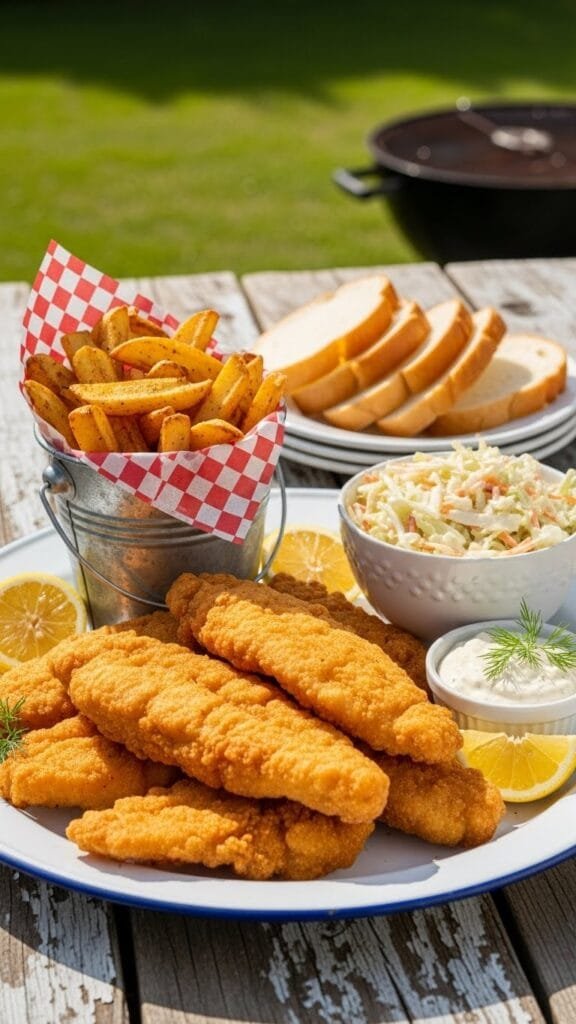
Serving Suggestions
Coleslaw
Fries or potato wedges
Hushpuppies
Tartar sauce, cocktail sauce, or lemon aioli
Simple salad with lemon dressing
Food Safety Notes
- Keep raw fish separate from cooked foods and utensils.
- Wash hands, surfaces, and tools after handling raw fish.
- Do not reuse oil contaminated with raw batter debris.
- Refrigerate leftovers within 2 hours of cooking.
Make Ahead
- Fish can be seasoned and refrigerated up to 24 hours before frying.
- Breading mixture may be prepared in advance and stored covered at room temperature.
- Fry just before serving for best texture and crispness.
Storage
- Allow fish to cool slightly before storing.
- Store in an airtight container in the refrigerator for up to 3 days.
Reheating
- Oven: Heat at 350°F (175°C) for 8–12 minutes until heated through and crisp.
- Air fryer: Reheat at 350°F for 4–6 minutes.
- Avoid microwaving if you want to keep the coating crisp.
Common Mistakes to Avoid
Oil not hot enough
Warm oil leads to soggy fish. Always check with a thermometer.
Overcrowding the pan
This lowers the oil temperature and prevents crisping. Fry in batches.
Skipping the drying step
Moisture causes the coating to slide off. Dry fillets thoroughly before seasoning.
Coating too lightly
Press gently to help the breading adhere.
Resting fish on plates
Steam forms underneath. Always rest fried fish on a wire rack.
Pro Tips for Extra-Crispy Fish
• Use panko instead of cornmeal for lighter, crunchier texture.
• Add a teaspoon of cornstarch to the flour for an even crispier finish.
• Keep the coated fish cold for 10 minutes before frying to help the crust set.
• Fry thicker fillets slightly longer and monitor color closely.
• For more flavor, season the flour mixture generously.
FAQ
1. What type of fish works best for frying?
Firm white fish is ideal because it holds up to high heat and remains flaky. Cod, haddock, tilapia, catfish, and halibut are all great options. Thin fillets cook quickly, while thicker ones may require a slightly longer fry time.
2. Why is oil temperature so important?
Oil that’s too cool causes the coating to absorb oil instead of crisping. Oil that’s too hot burns the coating before the fish cooks through. Keeping the temperature between 350°F and 375°F creates the right balance for color and texture.
3. How do I help the coating stick better?
Dry the fish thoroughly, season it, and press it into the flour mixture. Any moisture prevents the coating from adhering and creates bare spots during frying.
4. Can I use an alternative batter instead of dredging?
Yes. Light batters made with carbonated water create a thinner, airy crust.
5. Why does fried fish sometimes become soft after cooking?
Laying fried fish on a flat plate traps steam and softens the crust. A wire rack prevents this by allowing air to circulate underneath.
6. Can I prepare fish fry components ahead of time?
You can pre-cut, season, and refrigerate the fish earlier in the day. The breading station can also be prepared ahead. Fry the fish just before serving for best results.
7. What sauces pair well with fried fish?
Tartar sauce, remoulade, lemon aioli, and cocktail sauce complement the flavors well. Fresh lemon juice adds brightness to each bite.
Conclusion
Homemade fried fish is easy to master once you understand proper temperature control and coating technique. With simple ingredients and a consistent method, you can create a crisp, flavorful fish fry that works for any family meal. Serve it with classic sides or fresh salads, and enjoy a dish that feels both comforting and satisfying.
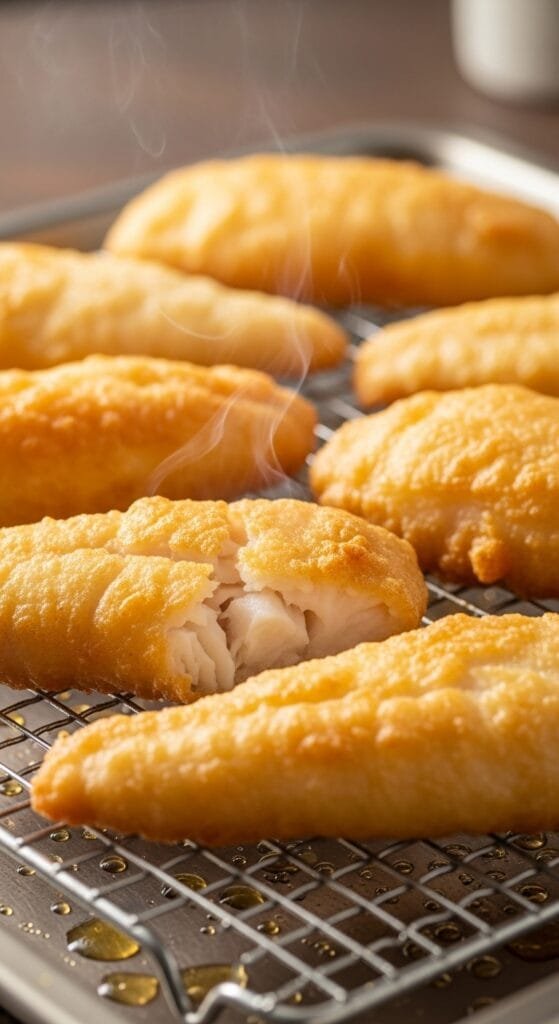


Crispy Homemade Fish Fry
Ingredients
Method
- Before You BeginPreheat and prepare your cookware as needed. Cooking times and results may vary depending on your equipment and ingredients.
- Pat the fish fillets completely dry, then season with salt, pepper, garlic powder, and paprika.
- In a bowl, mix flour, cornmeal or panko, baking powder, salt, black pepper, and cayenne. In another bowl, whisk eggs with milk.
- Heat frying oil to 350–375°F (175–190°C). Maintain temperature using a thermometer.
- Dip each fish fillet into the egg mixture, then dredge in the flour mixture, pressing gently to help coating stick.
- Fry the fish in batches for 3–5 minutes per side, or until golden brown and the internal temperature reaches 145°F (63°C) and the fish flakes easily.
- Transfer cooked fish to a wire rack to keep the crust crisp. Serve immediately with lemon wedges.
- Food Safety Note: Keep raw fish separate from ready-to-eat foods. Wash hands and surfaces thoroughly after handling raw fish.
Notes
About the Author
Isaac shares easy, family-friendly recipes made with simple ingredients, focusing on clear instructions and reliable results for everyday home cooking.