Spring pea risotto is the perfect combination of comfort and freshness. Arborio rice, sweet peas, Parmesan, butter, and warm broth come together to create a silky, restaurant-quality risotto that feels both refined and homey. This recipe focuses on classic technique—gentle stirring, warm stock, and slow absorption—to create the velvety texture risotto is known for.
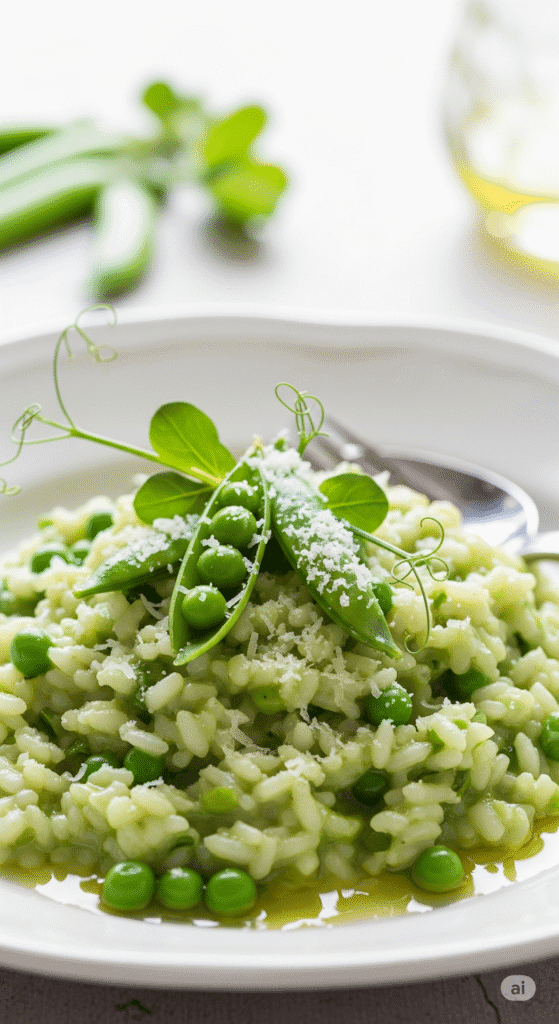
Whether you’re hosting a spring dinner, planning a cozy date night, or craving a flavorful one-pot meal, this vibrant risotto delivers big flavor from simple ingredients.
Why You’ll Love This Recipe
Creamy restaurant-style texture
Arborio rice naturally releases starch, creating a velvety sauce without cream.
Fresh, bright flavor
Peas add color, sweetness, and a burst of spring in every bite.
Simple ingredients, elevated results
Just rice, broth, butter, peas, and Parmesan—turned into something truly special.
Adaptable for seasons
Add asparagus, mushrooms, lemon zest, shrimp, or chicken.
A one-pot meal you can serve anytime
Works beautifully for brunch, lunch, or dinner.
Ingredients
- 1 tbsp olive oil
- 1 tbsp unsalted butter
- 1 small onion or 2 shallots, finely chopped
- 1 ½ cups Arborio rice
- 4–5 cups warm vegetable or chicken stock
- 1 cup fresh or frozen peas
- ½ cup grated Parmesan
- 2 tbsp cold butter
- Salt & black pepper
- Fresh mint or Parmesan for garnish
How to Make Spring Pea Risotto (Step-by-Step)
Before You Begin:
Preheat and prepare your cookware as needed. Cooking times and results may vary depending on your equipment and ingredients.
1. Sauté the Aromatics
Heat olive oil and 1 tablespoon butter in a heavy pot over medium heat. Add chopped onion or shallots and cook until softened, stirring occasionally.
2. Toast the Rice
Add Arborio rice and stir for 2–3 minutes until coated and lightly fragrant. Do not brown the rice.
3. Add Warm Stock Gradually
Add one ladle of warm stock at a time, stirring often. Allow each addition to absorb before adding more. Continue for 18–20 minutes until rice is tender with a slight bite and mixture looks creamy but not thick.
4. Add the Peas
Stir in peas during the final minutes of cooking so they heat through without overcooking.
5. Finish the Risotto
Remove the pot from heat. Stir in Parmesan and cold butter until the risotto looks glossy and creamy. Adjust seasoning as needed.
6. Serve
Serve warm. The risotto should be creamy and flow gently on the spoon. Garnish with mint or extra Parmesan if desired.
Refrigerate leftovers within 2 hours.
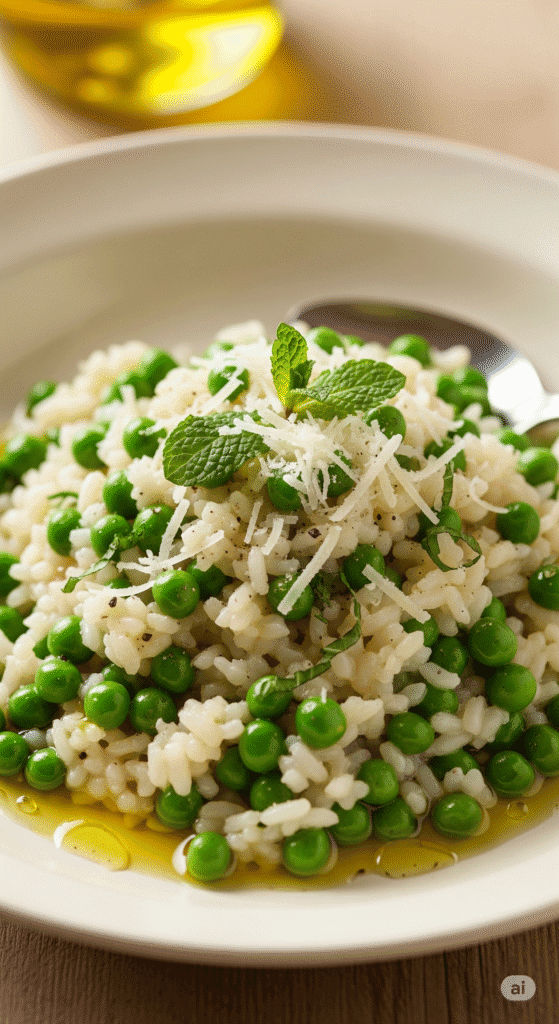
How to Serve
Pairs beautifully with:
- Lemon chicken
- Grilled shrimp or scallops
- Roasted asparagus
- Fresh salads
- Crusty bread
Food Safety
- Refrigerate leftovers promptly
- Store at or below 40°F (4°C)
- Do not leave risotto at room temperature longer than 2 hours
Storage, Reheating & Freezing
Refrigerate: Up to 3 days in an airtight container.
Reheat: Stovetop with a splash of broth.
Freeze: Not recommended—texture becomes grainy.
- Make Ahead
- Chop onion and measure ingredients up to 24 hours ahead; cook risotto fresh for best texture
Common Mistakes to Avoid
- Washing rice → removes necessary starch
- Adding stock too quickly → prevents creaminess
- Overcooking → turns rice mushy
- Using cold stock → interrupts cooking
- Not stirring enough → prevents the signature texture
FAQ
1. Can I make risotto with broth?
Yes. Risotto is traditionally made with broth added gradually so the rice releases starch and becomes creamy.
2. How do I know when the risotto is done?
Look for grains that are tender but still have a slight bite (al dente). The texture should be creamy and flowing—not stiff, not soupy. When you pull a spoon through the pot, the risotto should slowly fill the space like a wave.
3. Can I use a different type of rice?
Arborio is ideal, but Carnaroli or Vialone Nano are excellent alternatives. Avoid long-grain or jasmine rice; they don’t release enough starch to create the signature creamy consistency.
4. Should I stir risotto constantly?
You don’t need nonstop stirring, but frequent, gentle stirring helps release starch and prevents sticking. Think “slow and steady,” not frantic.
5. Can this recipe be made dairy-free?
Yes. Swap butter for olive oil and use a dairy-free Parmesan alternative. The texture will be slightly less silky, but still very good.
6. Can I add more vegetables?
Definitely. Asparagus, mushrooms, spinach, or leeks all work well. Add quicker-cooking vegetables near the end so they stay bright and tender.
7. Why must the stock be warm?
Warm stock keeps the risotto cooking consistently. Cold stock shocks the rice and slows absorption, leading to uneven texture.
8. What protein pairs best with pea risotto?
Seared scallops, grilled shrimp, lemon chicken, or crispy prosciutto complement the sweetness of the peas beautifully.
Conclusion
Spring pea risotto is a dish that transforms simple ingredients into something elegant and deeply satisfying. With creamy Arborio rice, sweet peas, and warm Parmesan-rich broth, each bite feels comforting yet bright. This recipe relies on classic risotto technique—gentle heat, patient stirring, and warm stock—to create its signature silky texture. Whether served as a main dish or a beautiful side, it’s a versatile meal that works for any season. Once you learn the rhythm of making risotto, it becomes one of those dishes you return to again and again for its flavor, ease, and timeless appeal.
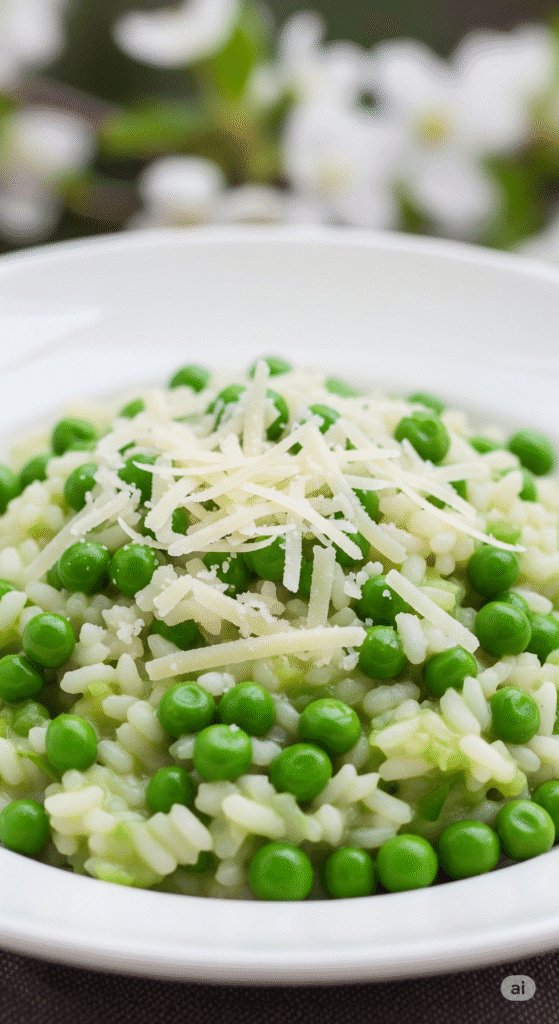
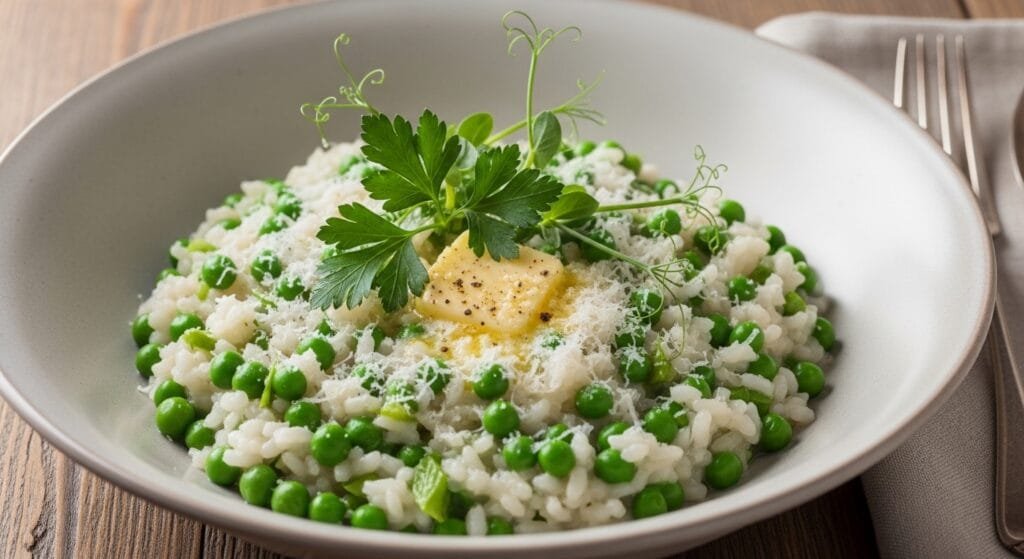

Spring Pea Risotto – Creamy, Bright & Classic Italian Rice Dish
Ingredients
Method
- Before You Begin
- Preheat and prepare your cookware as needed. Cooking times and results may vary depending on your equipment and ingredients.
- Cook Aromatics
- Heat olive oil and 1 tablespoon butter in a heavy pot over medium heat. Add onion or shallots and cook until softened, stirring occasionally.
- Toast Rice
- Add Arborio rice and cook 2–3 minutes, stirring until grains are coated and lightly fragrant. Do not brown.
- Add Broth Gradually
- Add one ladle of warm broth and stir frequently until absorbed. Continue adding broth gradually for 18–20 minutes until rice is tender with a slight bite and texture is creamy but not thick.
- Add Peas
- Stir peas into risotto during final minutes and cook until heated through.
- Finish
- Remove from heat. Stir in Parmesan and cold butter until glossy and smooth. Season to taste.
- Serve
- Serve warm. Refrigerate leftovers within 2 hours.
Notes
- Warm broth and add liquid gradually for a creamy texture; stir regularly.
- Store leftovers refrigerated up to 3 days.
- Reheat gently on the stovetop with a splash of broth until hot and creamy.
About the Author
Isaac shares easy, family-friendly recipes made with simple ingredients, focusing on clear instructions and reliable results for everyday home cooking.