A Hearty, Vegetable-Packed Classic
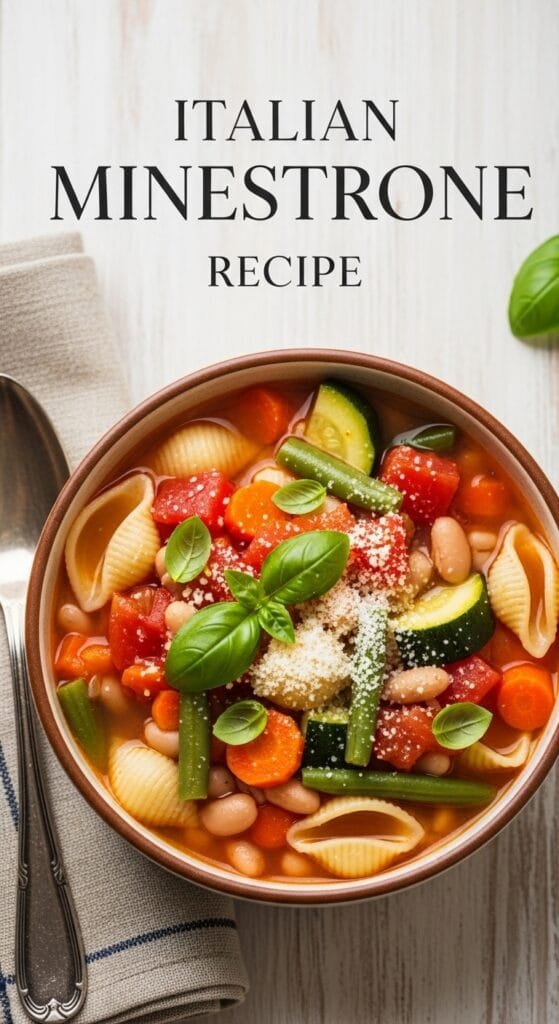
Italian Minestrone Soup is a classic vegetable soup rooted in simple technique and seasonal cooking. It begins with a gently sautéed vegetable base, followed by tomatoes, beans, broth, and small pasta to create a meal that is filling without being heavy. This soup is designed to be flexible, practical, and nourishing—ideal for both everyday dinners and make-ahead meals.

What defines minestrone is not a fixed ingredient list, but the method. Building flavor slowly at the start, adding vegetables in stages, and cooking the pasta only at the end ensures a broth that is rich and balanced rather than cloudy or overcooked. When prepared this way, minestrone delivers depth, comfort, and consistency every time.
Why You’ll Love This Recipe
• Uses simple, affordable vegetables
• Naturally vegetarian and easy to adapt
• Hearty enough to serve as a full meal
• Stores and reheats well
• Perfect for seasonal, batch cooking
Ingredients You’ll Need
Vegetables
• Onion
• Carrots
• Celery
• Zucchini
• Potatoes
• Kale or spinach
Flavor Base
• Olive oil
• Garlic
• Dried oregano
• Dried basil
• Dried rosemary
Pantry Staples
• Canned tomatoes
• Vegetable broth
• Cannellini or kidney beans
• Small pasta (ditalini or tubetti)
• Salt and black pepper
Optional for serving
• Grated Parmesan cheese
• Fresh basil or parsley
• Crusty bread
How to Make Italian Minestrone (Step by Step)
Before You Begin:
Preheat and prepare your cookware as needed. Cooking times and results may vary depending on your equipment and ingredients.
Step 1 — Build the Flavor Base
Heat olive oil in a large pot over medium heat. Add diced onion and cook until the pieces look translucent and softened, about 5 minutes.
Step 2 — Add Carrots and Celery
Stir in carrots and celery. Cook 5–7 minutes, stirring occasionally, until the vegetables look lightly softened.
Step 3 — Add Garlic and Herbs
Add minced garlic and dried herbs. Cook 1–2 minutes, stirring, until fragrant but not browned.
Step 4 — Add Broth and Tomatoes
Pour in canned tomatoes and vegetable broth. Bring to a gentle simmer.
Step 5 — Cook the Hearty Vegetables
Add potatoes and zucchini. Simmer uncovered 20–30 minutes, or until potatoes can be pierced easily with a fork.
Step 6 — Finish the Soup
Stir in beans, leafy greens, and pasta. Simmer 5–10 minutes, or until pasta feels firm-tender when tasted.
Step 7 — Season and Serve
Taste and adjust with salt and pepper. Serve warm.

Why Italian Minestrone Is Well-Balanced
Italian minestrone is made with a variety of vegetables, beans, and pantry ingredients. The overall nutrition of the soup depends on the specific vegetables used, portion size, and preparation method. This recipe focuses on balance, flexibility, and everyday ingredients rather than specific dietary goals.
Serving Suggestions
• Serve with crusty Italian bread
• Pair with a simple green salad
• Finish with grated Parmesan just before serving
Food Safety
- Wash vegetables thoroughly before chopping and cooking.
- Keep soup at a gentle simmer during cooking to ensure vegetables and pasta cook properly.
- Refrigerate leftovers within 2 hours of cooking.
- When reheating, heat soup until hot throughout, stirring occasionally for even heating.
- Discard if the soup develops off odor, unusual color, or texture changes.
Storage
- Allow the soup to cool slightly before storing.
- Transfer to an airtight container and refrigerate for up to 4 days.
Reheating
- Reheat gently on the stovetop over medium-low heat, stirring occasionally.
- Add a small amount of broth or water if the soup thickens during storage.
- Heat until evenly warmed throughout before serving.
Make-Ahead
- The soup base (vegetables, broth, and beans) can be prepared up to 2 days in advance and refrigerated.
- For best texture, cook the pasta separately and add when reheating.
- Flavors often develop and deepen after resting overnight, making it ideal for meal prep.
Tips for Best Results
• Fully sauté vegetables at the start
• Add pasta near the end only
• Taste and season at multiple stages
• Use fresh herbs at the end for brightness
Variations
• Use chickpeas or Great Northern beans
• Replace pasta with farro or orzo
• Swap kale for Swiss chard or cabbage
Common Mistakes to Avoid
• Overcooking the pasta
• Skipping the soffritto step
• Under-seasoning the broth
• Adding all vegetables at once
Frequently Asked Questions
What makes minestrone different from other vegetable soups?
Minestrone is defined by its layered cooking method rather than a strict ingredient list. It starts with a sautéed vegetable base and includes beans and often pasta or grains, creating a thicker, more filling soup than standard vegetable broth soups.
Can I change the vegetables?
Yes. Minestrone was traditionally made with whatever vegetables were available. Hard vegetables should be added earlier, while softer vegetables and greens should be added later to preserve texture.
Why is pasta added near the end?
Pasta absorbs liquid quickly. Adding it too early causes it to swell and become overly soft, which can thicken the soup too much and dull flavors.
Is minestrone considered a healthy soup?
Yes. Italian minestrone is made with vegetables, beans, and pantry ingredients. The overall nutritional content depends on the vegetables used, portion size, and preparation method.
Can this soup be vegan?
It already is. Simply skip the Parmesan garnish or use a plant-based alternative.
How can I thicken minestrone naturally?
Mash a few beans or potatoes against the side of the pot and stir them back in to thicken the broth without added starch.
Does minestrone taste better the next day?
Yes. Like many soups, the flavors continue to develop as it rests, making leftovers especially flavorful.
Conclusion
Italian Minestrone Soup shows how thoughtful technique and simple ingredients can create a deeply satisfying meal. By building flavor gradually, cooking vegetables in stages, and finishing the soup carefully, you get a balanced dish that is both nourishing and comforting. Its flexibility makes it easy to adapt to the seasons, while its nutritional profile supports everyday eating. Whether enjoyed fresh, reheated for lunch, or prepared ahead for busy weeks, this minestrone remains a dependable recipe worth returning to again and again.


Italian Minestrone Soup
Ingredients
Method
- Before You Begin
- Preheat and prepare your cookware as needed. Cooking times and results may vary depending on your equipment and ingredients.
- Sauté the Onion
- Heat olive oil in a large pot over medium heat. Add onion and cook until it looks translucent and softened, about 5 minutes.
- Add Carrots and Celery
- Stir in carrots and celery. Cook 5–7 minutes, stirring occasionally, until the vegetables look lightly softened.
- Add Garlic & Herbs
- Add garlic, basil, oregano, and rosemary. Cook 1–2 minutes, stirring, just until fragrant. Avoid browning the garlic.
- Add Tomatoes & Broth
- Pour in canned tomatoes and vegetable broth. Bring to a gentle simmer.
- Cook the Hearty Vegetables
- Add potatoes and zucchini. Simmer uncovered for 20–30 minutes, or until the potatoes can be easily pierced with a fork.
- Add Beans, Greens & Pasta
- Stir in the rinsed beans, leafy greens, and pasta. Simmer 5–10 minutes, or until the pasta tastes al dente. Add more broth if needed.
- Season & Serve
- Taste and adjust seasoning with salt and pepper. Serve hot with bread or Parmesan if desired.
Notes
About the Author
Isaac shares easy, family-friendly recipes made with simple ingredients, focusing on clear instructions and reliable results for everyday home cooking.