If you’re searching for a hands-off, nutritious, and deeply flavorful dinner, this slow-cooker vegetarian chili is the ideal choice. It turns simple pantry ingredients into a rich, satisfying meal that simmer slowly to develop bold, layered flavors. This version is hearty enough to impress meat lovers and simple enough for busy weeknights, meal prep, or feeding a crowd without spending hours in the kitchen

Plant-based chili is more than a comforting one-pot meal—it’s a dependable option for home cooks who want affordable, protein-rich dishes that store well, freeze well, and taste even better the next day. Each bowl delivers a balanced mix of beans, vegetables, spices, and slow-cooked richness that makes it a staple recipe for anyone who loves cozy, nourishing meals. Quick Answer:
Slow cooker vegetarian chili is a hearty one-pot dish made by slowly simmering beans, vegetables, tomatoes, and spices until thick, flavorful, and comforting.
Why Make Vegetarian Chili in a Slow Cooker?
Deep Flavor Development
The slow-cooking process allows beans, vegetables, and spices to meld gradually. This results in a smooth, full-bodied chili with perfectly balanced seasoning and natural sweetness from fresh vegetables.
Affordable and Nutritious
Beans and vegetables offer excellent plant-based protein, high fiber, and essential minerals—all while keeping your grocery bill low. A single batch yields multiple portions, making it ideal for family dinners or weekly meal prep.
Eco-Friendly Choice
Plant-based meals support sustainability by reducing resource use compared to meat-heavy dishes. This chili delivers great taste while supporting a smaller environmental footprint.
Ingredients You’ll Need
Base Ingredients
- 1 tablespoon olive oil
- 1 large onion, chopped
- 3 garlic cloves, minced
- 1 red bell pepper, chopped
- 1 green bell pepper, chopped
- 2 medium carrots, diced
These vegetables create the aromatic base and add natural sweetness and texture to the chili.
Beans (Plant-Based Protein)
- 2 cans (15 oz each) black beans, rinsed and drained
- 1 can (15 oz) kidney beans, rinsed and drained
Using multiple types of beans adds variety in texture and increases the protein and fiber content.
Tomato Base
- 1 can (28 oz) crushed tomatoes
- 1 can (15 oz) tomato sauce
These ingredients form the rich, hearty base that gives the chili its deep flavor.
Liquid
- 1 cup vegetable broth
Broth helps the chili simmer slowly and allows the flavors to develop during cooking.
Additional Ingredients
- 1 cup corn kernels
Corn adds a slight sweetness and a pleasant texture contrast to the beans.
Spices
- 2 tablespoons chili powder
- 1 teaspoon cumin
- 1 teaspoon smoked paprika
- Salt and black pepper, to taste
These spices create the signature warm, smoky flavor of chili.
Essential Tools
Tools You’ll Need
- 6-quart slow cooker
- Cutting board and sharp knife
- Wooden spoon
- Measuring cups and spoons
- Colander for rinsing beans
Prep and Cooking Time Breakdown
- Ingredient Prep: 20 minutes
- Vegetable Chopping: 10–15 minutes
- Slow-Cooking Time: 6–8 hours on low
- Final Seasoning: 5–10 minutes
Prepping ingredients ahead—especially vegetables and spices—helps you assemble everything in minutes on busy mornings.
How to Make Vegetarian Chili
Before You Begin:
Prepare your slow cooker and ingredients as needed. Cooking times and results may vary depending on your equipment and ingredients.
- Heat olive oil in a pan over medium heat. Sauté onion, garlic, and bell peppers for 3–4 minutes until softened.
- Transfer sautéed vegetables to the slow cooker.
- Add carrots, beans, crushed tomatoes, tomato sauce, broth, corn, and all spices. Stir until combined evenly.
- Cover and cook on LOW for 6–7 hours or HIGH for 3–4 hours, until vegetables are tender and the chili is thickened.
- Taste and adjust seasoning if needed before serving. The chili should be hot throughout and steaming
- Let chili rest 5 minutes before serving to allow heat to distribute evenly..
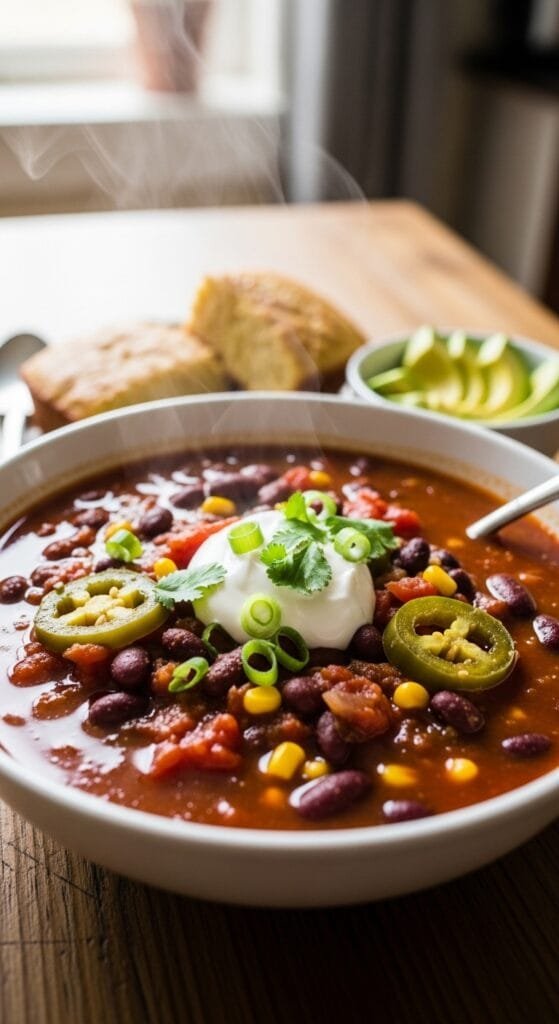
Customize Your Spice Level and Toppings
Adjusting Heat
- Mild: ½ teaspoon cayenne
- Medium: 1–2 teaspoons
- Hot: Add jalapeños or hot sauce during the final hour
Best Toppings
- Fresh cilantro
- Green onions
- Shredded cheese or nutritional yeast
- Sour cream or cashew cream
- Avocado slices
- Tortilla strips
- Lime wedges
These toppings add brightness, creaminess, and crunch, making each bowl customizable.
Food Safety
- Refrigerate leftovers within 2 hours of cooking.
- Reheat portions until steaming hot throughout before serving.
- Store food in clean, airtight containers.
Make Ahead
- Chop vegetables up to 24 hours in advance and refrigerate until ready to use.
- Combine ingredients in the slow cooker insert the night before, cover, and refrigerate; begin cooking the next day.
Reheat
- Microwave portions for about 1–2 minutes, stirring halfway through heating.
- Or reheat on the stovetop over medium heat until hot.
Storage
- Refrigerator: up to 4 days.
- Freezer: up to 3 months.
Serving Ideas and Side Dishes
Pair your chili with:
- Homemade cornbread
- Sourdough slices
- Baked sweet potatoes
- Quinoa salad
- Kale chips
- Cauliflower rice
These sides add texture, flavor, and balance to your comforting meal.
Beginner Note: This recipe is very forgiving, making it perfect if you’re new to slow cooking.
Vegetarian Chili Variations and Substitutions
- Replace beans with lentils or quinoa for a different protein profile.
- Add vegetables like sweet potatoes, butternut squash, or roasted corn.
- For gluten-free versions, ensure broth and spices are certified gluten-free.
- Reduce sodium by using low-sodium canned beans and broth.
Taste as you go to maintain flavor balance.
Common Mistakes
- Not sautéing aromatics first — raw onions and garlic taste harsh.
- Using beans straight from the can without rinsing — can add excess sodium.
- Adding too much broth — can make the chili watery instead of thick.
- Lifting the lid during cooking — releases heat and slows cooking time.
- Skipping final seasoning — flavors need adjusting after slow-cooking.
- Adding delicate veggies too early — they break down and disappear.
- Cooking on HIGH the whole time — may over-soften beans and veggies.
FAQ
Q1: Can I make this chili spicier?
Yes. Add extra cayenne, diced jalapeños, or your favorite hot sauce during the last hour of cooking. This allows the heat to blend without overpowering the dish.
Q2: Can I make this chili without beans?
You can substitute beans with lentils, quinoa, or chopped vegetables like squash. Reduce broth slightly to maintain the right thickness.
Q3: How long does vegetarian chili last?
It lasts up to four days in the refrigerator and three months in the freezer. Store it in airtight containers to maintain freshness and flavor.
Q4: Can I use fresh tomatoes instead of canned?
Yes. Use four to five cups of chopped fresh tomatoes to replace one 28-ounce can. Adjust broth if the mixture becomes too watery.
Q5: How do I thicken the chili?
Mash a small portion of the beans or simmer uncovered during the final hour. Both methods naturally thicken the chili without additional ingredients.
Conclusion
This slow-cooker vegetarian chili is a dependable recipe that delivers comfort, flavor, and nutrition with minimal effort. Each ingredient contributes to a well-rounded meal that suits weeknights, meal prep, and family gatherings. The tender beans, fresh vegetables, and balanced spices develop a deep, satisfying taste that even meat lovers enjoy. With easy customization, excellent storage potential, and simple preparation steps, this chili is a recipe you’ll return to again and again. Whether you’re cooking for yourself or feeding a crowd, it provides a wholesome, hearty dinner that fits effortlessly into any lifestyle.


Vegetarian Crockpot Chili
Ingredients
Method
- Before You Begin
- Prepare your slow cooker and ingredients as needed. Cooking times and results may vary depending on your equipment and ingredients.
- Heat olive oil in a skillet over medium heat. Add onion, garlic, and bell peppers and sauté 3–4 minutes until softened.
- Transfer vegetables to the slow cooker.
- Add carrots, beans, crushed tomatoes, tomato sauce, broth, corn, and spices. Stir until evenly combined.
- Cover and cook on LOW for about 6 hours or HIGH for about 3½ hours, until vegetables are tender and chili is thickened.
- Taste and adjust seasoning if needed. Chili should be hot throughout and steaming.
- Let rest 5 minutes before serving to allow heat to distribute evenly.
Notes
About the Author
Isaac shares easy, family-friendly recipes made with simple ingredients, focusing on clear instructions and reliable results for everyday home cooking.