A plain fence can become one of the prettiest parts of your garden with the right flowers, planters, and landscaping details. These garden fence flower ideas combine colorful borders, vertical planting, cottage-style charm, and practical solutions for small yards so you can create a garden that feels lush without wasting valuable space.
1. Create a Cottage-Style Flower Border
This article contains affiliate links. As an Amazon Associate, I may earn from qualifying purchases at no extra cost to you.

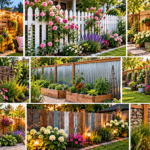
Plant a relaxed mix of flowers directly along the fence for a soft, romantic effect. Roses, lavender, daisies, salvia, and other flowering plants can create layers of color while helping the fence blend naturally into the garden.
A picket fence flower border looks especially charming with a mixture of different heights rather than a perfectly uniform row. Leave enough space between plants and the fence for airflow and maintenance.

2. Build a Layered Fence-Line Flower Bed


Instead of planting everything at the same height, arrange your fence line flower border in three levels. Put taller flowers or shrubs toward the back, medium plants in the center, and low-growing flowers along the front edge.
This layered flower bed in front of fence creates depth and makes a narrow planting area look fuller. Choose plants according to the amount of sunlight your fence receives throughout the day.
3. Add Flower Boxes to a Wooden Fence

When ground space is limited, move some of your planting upward with flower boxes on wooden fence panels. Fill them with compact flowers, herbs, or trailing plants that spill gently over the edges.
Fence planter boxes are particularly useful for a small backyard fence border because they add color without taking much walking or seating space.
4. Create a Colorful Hanging-Pot Display
Turn an ordinary fence into a vertical garden by arranging containers at different heights. Hanging pots on garden fence panels can hold trailing flowers, compact annuals, or herbs.
For a softer cottage look, try pastel hanging pots on fence sections in muted pink, blue, cream, or green. Grouping containers in odd numbers can also make the display feel more naturally balanced.

5. Turn the Fence Into a Vertical Garden
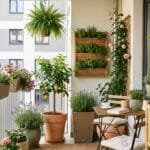
Use the fence as extra growing space with shelves, narrow planters, wall pockets, or simple hanging containers. Vertical planting on backyard fence is especially helpful when the garden bed is shallow.
For a weekend project, create a simple DIY garden fence landscaping display using weather-resistant shelves or reclaimed-looking wood. Make sure containers are securely attached and have adequate drainage.
6. Frame a Wooden Gate With Roses
Make the garden entrance a focal point by planting climbing roses around a wooden gate. A wooden gate pink roses combination creates a classic romantic look, especially when paired with soft greenery.
Choose a sturdy support for climbing plants and give roses enough room to grow without blocking the gate. This small detail can make an ordinary entrance feel much more inviting.
7. Use a Painted Fence as a Colorful Backdrop
A fresh coat of paint can dramatically change the appearance of a garden. A painted wooden fence garden in a muted green, cream, blue, or other soft shade can provide a beautiful background for contrasting flowers.
For a cheerful cottage look, a hand painted blue picket fence can be paired with white, pink, purple, and yellow blooms. Keep the surrounding planting relatively simple so the fence remains part of the visual focal point.
8. Add a Rustic Border and Stepping-Stone Path
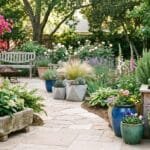
Combine flowers with natural materials for a relaxed rustic garden fence setup. Use stone edging to define the planting area and add a few stepping stones where you need access for watering, pruning, or walking.
A stepping stone path along fence is particularly useful beside a narrow side yard fence flower bed, where a traditional pathway may take up too much space.
9. Layer Planters Around a Patio Fence
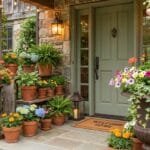
A patio fence doesn’t have to remain a blank backdrop. Create a patio edge fence flower border with a mixture of ground-level containers, flowers, and taller greenery.
For additional height, use stacked planter boxes on wooden fence sections and place larger pots below them. Add a defined edge with stones to create a neat stone edging fence flower bed.
How to Choose Flowers for a Fence Line
Before buying plants, check how much direct sunlight the fence receives. A sunny fence can support many flowering plants, while a shaded area may need plants specifically suited to lower light.
Also consider:
- Soil drainage: Avoid placing plants where water consistently collects.
- Plant spacing: Give mature plants enough room so the bed doesn’t become overcrowded.
- Fence access: Leave enough room to paint, repair, or clean the fence.
- Plant height: Use taller plants toward the back and shorter varieties near paths.
- Maintenance: Mix a few reliable, easy-care plants with seasonal flowers if you want less upkeep.
- Containers: Always use pots and boxes with drainage holes.
Final Thoughts
You don’t need a large backyard to create an impressive garden border. From flowers along a fence and cottage-style planting to hanging containers, vertical displays, roses, and stone-edged beds, these ideas can turn an ordinary boundary into a colorful feature.
Whether you’re creating a house garden aesthetic, updating a small side yard, or simply looking for an easy weekend project, start with the amount of sunlight and available space, then build your fence planting around plants you’ll actually enjoy caring for.