A small living room does not have to feel cramped or crowded. With the right colors, furniture, lighting, and layout, you can create the impression of a more open and comfortable space.
The secret is not necessarily having fewer things—it is choosing pieces that work well with the size and shape of the room. From creating clearer walking paths to using vertical space and selecting visually lighter furniture, these small living room ideas can help your home feel brighter, bigger, and easier to enjoy.
1. Keep the Main Color Palette Light
This article contains affiliate links. I may earn a commission at no extra cost to you
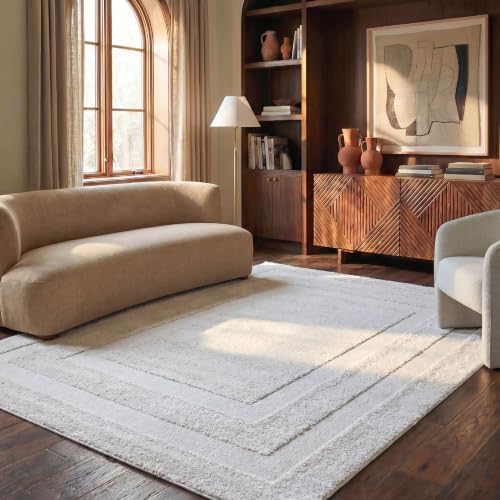
- [NON-SHEDDING]: Expertly machine-woven from enhanced soft synthetic durable fibers that have a virtually non-shedding pi…
- [PLUSH & COZY]: Features a 1.2-inch thick textured pile height for just the right amount of cozy cushioned softness unde…
- [TRENDY STYLE]: Design beautifully enhances any room of the home, from the living room, dining room, bedroom, entryway, …
Light colors can help a small living room feel more open because they reflect more light and create a softer visual background. Warm white, cream, light beige, soft gray, and pale neutral shades are all useful choices for walls and larger furniture pieces.
You do not have to avoid color completely. Instead, use deeper shades through smaller accents such as cushions, artwork, throws, or decorative objects. Keeping the main color palette connected can also help the eye move more smoothly around the room.
What You’ll Need:
- Light-colored wall paint
- Neutral furniture
- Soft-colored rug
- Light curtains
- A few accent accessories
Quick How-To:
Choose one or two light neutral shades for the largest surfaces in the room, then add color through smaller decorative pieces.
Styling Tip:
Use different textures within a neutral palette to keep the room from looking plain or flat
2. Place a Mirror Where It Can Reflect Light
A well-positioned mirror can make a noticeable difference in a small living room. When placed near a window or opposite a bright area, it can reflect natural light and create more visual depth.
A large wall mirror often makes a stronger impact than several small mirrors. However, the best choice depends on the available wall space and the overall style of your room.
What You’ll Need:
- Large wall mirror
- Secure wall hardware
- Measuring tape
- Optional wall lighting
Quick How-To:
Choose a wall where the mirror can reflect light, an open area, or another attractive part of the room.
Styling Tip:
Avoid placing a mirror where it mainly reflects clutter or a busy storage area.

- Black Metal Frame Mirror: Aluminum alloy as the frame of the round wall mirror will be more sturdy and durable, and the …
- Wide Application: The more classic the design, the easier it is to use as decoration. This 42/48 inch circle mirror is s…
- Clear Reflection: Reflection isn’t distorted, which is what you most hope and indeed what this round bathroom mirror pos…
3. Choose Furniture That Fits the Scale of the Room
Large, heavy furniture can quickly dominate a small room. Look for sofas, chairs, tables, and storage pieces with proportions that suit the available space.
A compact sofa or loveseat may work better than an oversized couch, while a small sectional can be useful when it provides enough seating without requiring several separate chairs. Slim side tables and a narrow console or entry table can also provide useful surfaces and storage without taking up as much visual space as a bulky dresser or cabinet.
What You’ll Need:
- Compact sofa or loveseat
- Slim side tables
- Narrow console table
- Compact storage furniture
- Measuring tape
Quick How-To:
Measure the room before buying furniture and leave enough space for comfortable movement around each major piece.
Styling Tip:
Focus on furniture scale rather than simply buying the smallest pieces available. Choose pieces that meet your needs without overwhelming the room.
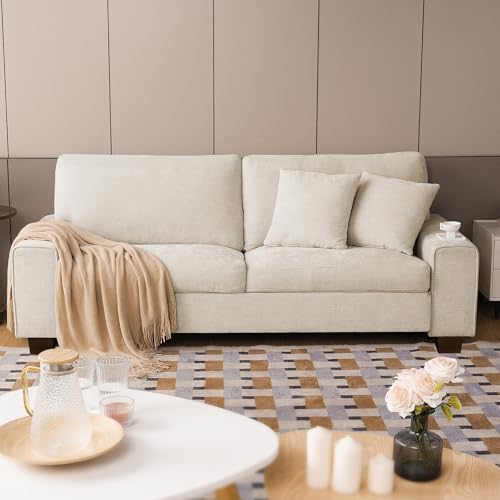
- 【Attractive Sofa Design】 The overall dimensions of this modern minimalist fabric sofa are 32.3″(D) x 71.25″(W) x 36.6″(H…
- 【Sturdy&Sturdy Frame】 This 71.25″ three-seat sofa is made of sturdy steel frame backrests and wood, capable of holding u…
- 【Removable And Washable Sofa Cover】 Removable backrests and cushions you can easily remove them for cleaning and mainten…
4. Let More of the Floor Stay Visible
Showing more of the floor can make a room appear less crowded. Furniture raised on exposed legs creates visual space underneath, which can make the overall layout feel lighter.
This works particularly well for sofas, armchairs, sideboards, consoles, and some storage cabinets. Keeping the floor visible also helps create a clearer sense of space from one side of the room to the other.
What You’ll Need:
- Raised-leg furniture
- A simple area rug
- Minimal floor accessories
Quick How-To:
Choose one or two larger furniture pieces that allow the floor beneath them to remain visible.
Styling Tip:
Avoid placing too many small objects directly on the floor, especially along walking paths.

- 100% NATURAL JUTE : This rug has been carefully handmade using 100% natural jute fibers, which can result in slight vari…
- HIGHLY DURABLE : The rug is crafted in a manner that ensures durability and can withstand everyday use, while also being…
- BRAIDED TEXTURE : With its braided texture, this rug brings about a charming blend of farmhouse, bohemian, and coastal a…
5. Use Vertical Space Instead of Filling the Floor
When floor space is limited, the walls become more valuable. Tall bookcases, narrow shelving, wall-mounted storage, and vertically arranged artwork can help draw the eye upward.
Slim floating shelves are another useful option for displaying books, plants, or decorative objects without adding a large cabinet to the floor. Using vertical space can also reduce the need for additional bulky furniture.
What You’ll Need:
- Floating shelves or tall shelving
- Wall anchors
- Decorative storage
- Artwork or wall decor
Quick How-To:
Use higher wall areas for storage or decoration while keeping lower areas as open as possible.
Styling Tip:
Do not fill every wall with shelves. Leaving some empty wall space helps the room feel calmer and more spacious.

- 【Multiple Install Combinations】- Let’s use our creativity and imagination! The designed matte surface metal triangular b…
- 【Multi-Functional Shelves】- Our shelves are good choices for kitchen, living room, bedroom, bathroom, bathroom, office, …
- 【Product Specification】- Large: 16.5 X 6.1 X 4.3 inches, medium: 14.2 X 6.1 X 4.3 inches, small:11.4 X 6.1 X 4.3 inches,…
6. Create Clear Walking Paths
A room can feel much smaller when furniture blocks natural movement. Even a well-decorated space can become uncomfortable if people have to squeeze between tables, chairs, and other obstacles.
Arrange furniture so there is a clear route through the room and enough space to move comfortably. Good furniture placement is especially important in a small apartment living room where one space may serve several purposes.
What You’ll Need:
- Basic room measurements
- Furniture sliders if needed
- A simple floor plan
Quick How-To:
Start with the largest furniture pieces and arrange them first. Then place smaller pieces without blocking the main walking areas.
Styling Tip:
Move furniture around before buying new items. Sometimes a better layout can improve the room without spending any money.
7. Choose One or Two Larger Decorative Statements
A common mistake in small spaces is filling every available surface with many small decorations. Too much decor can create visual clutter and make a living room feel busy.
Instead, choose a few decorative focal points. A larger piece of artwork, an attractive lamp, or a statement plant can create more impact than many unrelated objects.
When arranging smaller accessories, try grouping them in sets of three or five. This can create a more intentional display while helping you avoid scattering decorations throughout the room.
What You’ll Need:
- Statement artwork
- Decorative lamp
- Large plant or vase
- A few carefully selected accessories
Quick How-To:
Choose one main focal point for each important area instead of adding decorations everywhere.
Styling Tip:
Group smaller accessories together and leave some empty space around them for a cleaner look.

- Realistic Look: Full, lush foliage with two trunks and hundres of leaves; feels real to the touch; brightens any indoor …
- Maintenance-Free: No watering or upkeep needed; saves time and effort; perfect for busy lifestyles
- Flexible Design: Bendable branches and stems allow for easy reshaping to reach the desired fullness and shape
8. Try Furniture With Glass or Open Designs
Furniture that allows you to see through or around it can make a room feel visually lighter. Glass tables, transparent furniture, open-frame shelving, and furniture with slender structures can provide function without creating a heavy appearance.
A glass or see-through coffee table can be especially useful in a small living room because it allows the eye to travel across the room rather than stopping at a large solid piece of furniture.
What You’ll Need:
- Glass or open-frame coffee table
- Slim decorative accessories
- A balanced seating arrangement
Quick How-To:
Use visually lighter furniture for areas where bulky pieces would interrupt the view across the room.
Styling Tip:
Keep glass surfaces relatively uncluttered so their open appearance remains effective.

- Spacious Top: 36″ diameter provides ample space for drinks, books, decor, or work essentials.
- Tempered Glass Top: Clear glass top adds elegance while ensuring durability and easy cleaning for daily use.
- Black Finish: Matte black frame brings understated elegance and industrial-modern appeal to your space.
9. Add Furniture That Serves More Than One Purpose
Multifunctional furniture is especially helpful in a small living room. A storage ottoman can provide a place to sit, rest your feet, store blankets, or support a decorative tray.
Other useful options include nesting tables, storage benches, compact side tables with drawers, and seating with hidden compartments. Choosing furniture that performs several functions can reduce the number of separate pieces needed in the room.
What You’ll Need:
- Storage ottoman
- Nesting tables
- Hidden storage furniture
- Decorative trays
Quick How-To:
Look for furniture that solves more than one need before adding an additional piece to the room.
Styling Tip:
Choose multifunctional furniture that you will actually use regularly rather than adding storage simply because it is available.
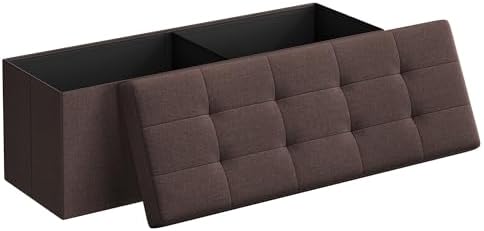
- 【QUICK ASSEMBLY, EASY FOLDAWAY】This storage ottoman from the SONGMICS MAZIE Collection has a foldable design that allows…
- 【AMPLE STORAGE】Measuring 15″D x 43″W x 15″H (38 x 110 x 38 cm), this storage bench offers a 35-gallon (131 L) volume. It…
- 【STURDY AND DURABLE】Built with premium MDF panels and reinforced with metal corner guards on the lid, this ottoman is st…
10. Use Wall-Mounted Solutions to Free Up Space
Moving selected items off the floor can make a small living room feel less crowded. Wall-mounted shelves, lighting, storage, and entertainment solutions can create more usable floor space.
A wall-mounted TV can also eliminate the need for a large entertainment unit, helping the room look more open. Depending on your storage needs, you can add a narrow floating shelf below it for small devices and accessories.
What You’ll Need:
- Wall-mounted shelving
- TV wall mount
- Appropriate wall hardware
- Cable organizers
- Professional installation help when necessary
Quick How-To:
Identify items that do not need to sit on the floor and consider whether they can be safely mounted or moved to a wall-based solution.
Styling Tip:
Keep visible cables and accessories organized to maintain a clean appearance.

- Floating Shelves for Wall Storage Set of 6 – The size of the WOPITUES floating shelves for wall is 16.5*6*0.6 inches. WO…
- Sturdy & Easy to Assemble- The L-shaped metal brackets are durable, with a capacity of 40Lb. You don’t need to worry abo…
- Natural Wood & Wall Mounted Design – Our 6 sets bathroom floating shelves for wall are made of wood which grows naturall…
11. Make the Most of Your Room’s Existing Features
Instead of trying to make your living room look like a completely different space, work with its natural features. Windows, brick walls, architectural details, unusual corners, built-in storage, and interesting wall finishes can become part of the design.
Choose furniture, colors, and materials that work with these existing features. In a small room, using too many competing colors, textures, and shapes can make the space feel visually busy. Creating a more connected design helps the eye move smoothly through the room.
What You’ll Need:
- A clear view of the room’s layout
- Furniture that fits the architecture
- Coordinated colors
- Complementary textures
- Lighting suited to the space
Quick How-To:
Identify the room’s strongest features and arrange furniture to support them rather than hiding or fighting against them.
Styling Tip:
Repeat a few colors, materials, or shapes throughout the room, but avoid introducing too many competing elements.
Final Thoughts
Making a small living room feel bigger is often about creating better visual balance rather than removing everything from the space. Light colors, thoughtful furniture choices, clear walking paths, useful storage, and carefully selected decor can all help your room feel more open.
Start with the changes that make the biggest difference for your current layout. You may find that rearranging furniture, reducing visual clutter, adding a large mirror, using vertical storage, or choosing better lighting is enough to completely change how the room feels.
With a few smart small-space decorating choices, even a compact living room can become a comfortable, stylish, and welcoming place to spend time.